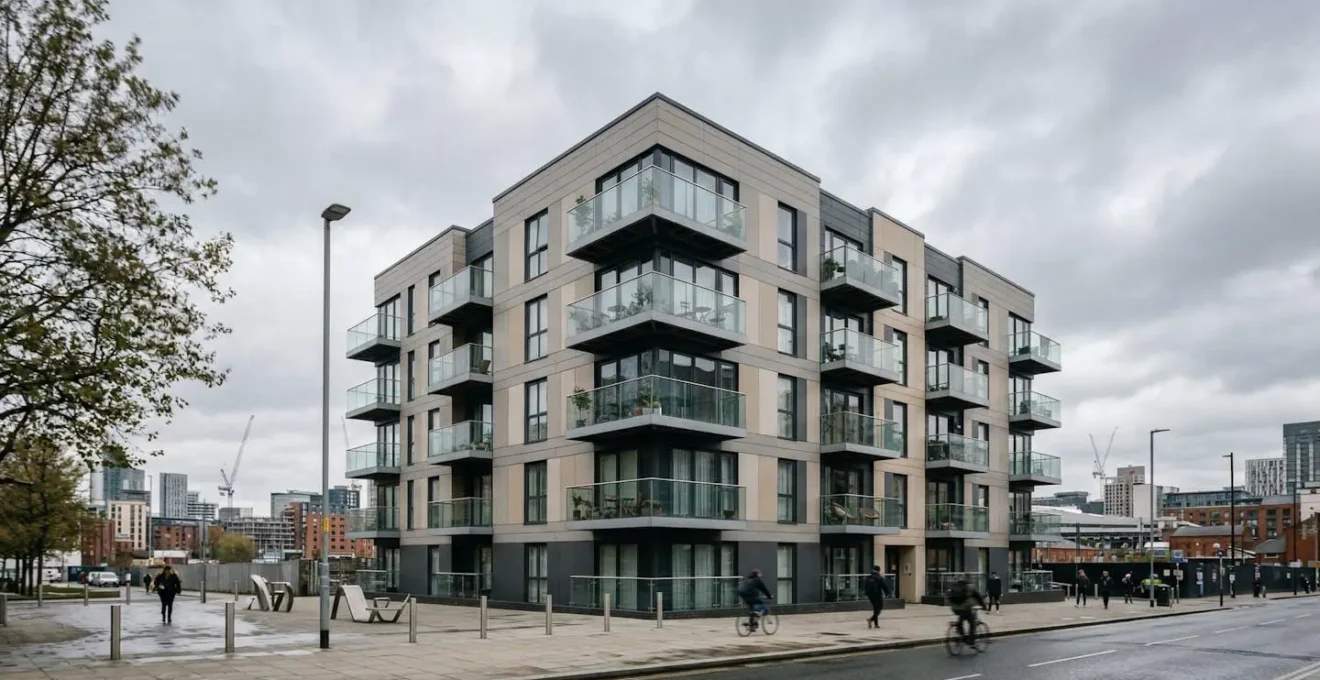
The ‘new-build premium’ is not a sign of quality; it’s often the entry fee to a system of hidden liabilities, where initial low running costs obscure future multi-thousand-pound bills for structural and safety defects.
- Post-Grenfell building safety assessments (EWS1) can render flats unmortgageable overnight, triggering massive remediation costs.
- Developers frequently underfund reserve pots, creating a ‘service charge time bomb’ that explodes with special levies for major works.
- Complex lease clauses and developer corporate structures (SPVs) are often designed to transfer long-term financial risk from the builder to the homeowner.
Recommendation: Treat every new-build purchase not as a home, but as a forensic financial audit. Your conveyancer is your first line of defence—arm them with targeted questions and demand total transparency before signing.
The letter arrives on a Tuesday morning, nestled between a takeaway menu and a bank statement. The heading is stark: “Notice of Special Assessment for Cladding Remediation.” The figure at the bottom makes your breath catch in your throat: £15,000. For a moment, it doesn’t compute. This is a modern, five-year-old apartment, the kind of property you bought specifically to avoid the endless maintenance dramas of older housing stock. The glossy brochure promised a hassle-free lifestyle, energy efficiency, and the peace of mind that comes with a 10-year warranty. It did not mention the possibility of a bill equivalent to a new car for a problem you didn’t create.
This scenario is the new reality for hundreds of thousands of new-build owners across England. The common advice—”check the developer’s reputation,” “read the lease”—feels woefully inadequate. These are platitudes from a pre-Grenfell world. The real issue is deeper, woven into the very fabric of how modern apartment blocks are financed, built, and sold. The problem isn’t just about cladding; it’s a systemic issue of latent liabilities, where the true cost of ownership is deliberately deferred, only to emerge years after the developer has moved on to the next project.
But what if the key to protecting yourself wasn’t just about avoiding a “bad” building, but about understanding the financial traps inherent in the “good” ones? What if the low initial service charge was a marketing gimmick, a ticking time bomb set to explode? This guide moves beyond the surface-level checks. It’s a risk-revealing analysis designed for the owner on the receiving end of that shocking letter. We will dissect the mechanisms that lead to these financial shocks, from opaque external wall assessments and underfunded reserves to the legal loopholes that leave you holding the bill. We will give you the framework to assess the true, long-term cost of a new-build flat before it’s too late.
To navigate this complex landscape, this article deconstructs the key financial risks and structural issues facing new-build apartment owners in England. The following sections provide a detailed breakdown of each critical area you must investigate.
Contents: Deconstructing the Hidden Costs of New-Build Ownership
- Why Does Your Mid-Rise Apartment Block Need an External Wall System Assessment?
- How to Research a Developer’s Defect History Before Buying Off-Plan?
- New-Build Apartment at £350,000 or 3-Year-Old Resale at £320,000: Which Is Better Value?
- The £8,000 Special Assessment Because the Development Reserve Was Underfunded
- When to Buy in a New Development: Phase 1 Pricing or Final Phase Completion Certainty?
- The Hidden £8,000 Annual Service Charge That Bankrupts New-Build Flat Owners
- The £40,000 Roof Repair Bill That Only the Penthouse Owner Had to Pay
- Why Does a Duplex Penthouse in Manchester Cost Triple a Single-Level Apartment of the Same Size?
Why Does Your Mid-Rise Apartment Block Need an External Wall System Assessment?
The term “EWS1 form” entered the lexicon of English property owners as a direct consequence of the Grenfell Tower tragedy. An External Wall System (EWS) assessment is not a mere formality; it is a fire-risk appraisal of the entire external structure of a residential building, including cladding, insulation, and fire barriers. For any owner in a mid-rise block (typically those over 11 metres), the lack of a favourable EWS1 form can render their property virtually worthless overnight. It blocks sales, prevents remortgaging, and signals the start of a potentially ruinous financial journey. The scale of this issue is vast; 47% of mortgage valuations for flats in buildings 7 storeys and above required an EWS1 form in late 2024, demonstrating how central this document has become to the market.
The rating on an EWS1 form determines your financial fate. A rating of A1, A2, or B1 generally means the building is considered safe, and mortgage lenders will proceed. However, a B2 rating signifies that combustible materials are present and urgent, costly remediation is required. At this point, the flat becomes unmortgageable. This is the trigger for the £15,000 levy from our title—and that figure can often be much higher. The government itself has acknowledged the hidden scale of the problem. As experts highlighted in an analysis by Pinsent Masons, the UK Government stated, “There are between 4,000 and 7,000 buildings that are above 11 metres and below 18 metres with unsafe cladding in England that have not been identified.” This is the definition of a latent liability waiting to materialise for thousands of unsuspecting owners.
The following table breaks down the EWS1 rating system, a critical piece of information for any potential buyer or current owner to understand the direct link between a surveyor’s report and their financial security.
| EWS1 Rating | Fire Risk Level | Mortgage Lending Impact | Insurance Impact |
|---|---|---|---|
| A1 | No combustible materials detected | Mortgages approved – normal lending | Standard insurance premiums |
| A2 | Limited combustible materials, low risk | Mortgages approved – normal lending | Standard to slightly elevated premiums |
| A3 | Combustible materials present, remediation planned | Mortgages conditional on remediation evidence | Elevated premiums |
| B1 | Some remediation required, not urgent | Mortgages approved with leaseholder protections | Elevated premiums |
| B2 | High fire risk, urgent remediation needed | Virtually unmortgageable without remediation plan | Very high premiums or uninsurable |
How to Research a Developer’s Defect History Before Buying Off-Plan?
Buying off-plan is marketed as an opportunity to secure a property at a discount, but it’s more accurately described as an act of faith in a developer’s future promises. The greatest risk is not that the finish will be subpar, but that the developer will cease to exist, leaving buyers with lost deposits and half-finished buildings. This practice of developer’s phoenixing—using a Special Purpose Vehicle (SPV) for a single project and then dissolving it upon completion—is a common tactic to shed long-term liability for defects. When a £15,000 cladding bill arrives five years later, the company that built the block is often just a ghost in the Companies House registry.
The construction industry’s volatility makes this risk acute. In the 12 months leading up to August 2024, a staggering 4,310 construction firms collapsed in England and Wales, accounting for 17% of all business insolvencies. This is not a marginal risk; it’s a central feature of the industry. Therefore, standard due diligence is insufficient. A prospective buyer must become a forensic investigator, digging into a developer’s corporate history and past performance to spot the red flags before committing hundreds of thousands of pounds.
Vetting a developer requires a proactive, almost adversarial approach. You cannot rely on marketing materials or the assurances of a sales agent. The checklist below provides a powerful starting point for any serious buyer looking to pierce the corporate veil and understand who they are really getting into business with.
Your Power-User Due Diligence Plan: Vetting a Developer
- Expose the Structure: Search the developer’s name on the Companies House website. Look for a pattern of previously dissolved ‘Special Purpose Vehicle’ (SPV) companies, a classic sign of avoiding long-term liability.
- Verify a Key Commitment: Check if the developer has signed the government’s Building Safety Pledge. This is a public commitment to fix life-critical fire-safety defects in their own buildings, and their absence from this list is a major red flag.
- Unearth Public Complaints: Visit the local council’s planning portal. Read through public objections and comments on the developer’s past projects to find candid feedback from previous residents and neighbours.
- Search for Legal Disputes: Check the First-tier Tribunal (Property Chamber) official register for property dispute decisions involving the developer. This reveals formal conflicts over service charges, build quality, and management.
- Find Unfiltered Testimonials: Join UK-based homeowner forums like the National Leasehold Campaign or HomeOwners Alliance. Search for the developer’s name to find raw, unfiltered testimonials about build quality and defect resolution.
New-Build Apartment at £350,000 or 3-Year-Old Resale at £320,000: Which Is Better Value?
On the surface, the choice seems difficult. The £350,000 new-build offers pristine interiors, the latest fixtures, and the allure of being the very first owner. The £320,000 three-year-old resale might show minor wear and tear, but comes at a significant discount. The critical error most buyers make is assuming the £30,000 difference is simply the price of “newness.” In reality, this is the ‘new-build premium’ trap, a well-documented phenomenon where buyers pay a significant markup that evaporates the moment they turn the key. UK House Price Index data reveals that the average new build costs £380,000 compared to £283,000 for older homes, a premium far exceeding the value of new fixtures.

This premium is not just a market quirk; it reflects a fundamental risk assessment by mortgage lenders. As legal experts at Toomey Legal point out, “New build properties will begin to depreciate in value as soon as it is no longer brand new… Mortgage lenders will typically loan a lesser amount… because lenders expect that the new build will drop in value within its first few years.” The £350,000 price tag isn’t just for the flat; it’s a bet that no significant defects will emerge during this initial period of rapid value depreciation. When a £15,000 cladding levy hits in year five, it doesn’t just add to your costs—it compounds your potential negative equity.
The three-year-old resale, by contrast, has already weathered this initial depreciation. More importantly, it has a track record. Three years of service charge accounts can be audited, minutes from residents’ meetings can be reviewed, and any major building-wide issues (like a failed EWS1 assessment) are likely to have already surfaced. The £30,000 saving isn’t just a discount; it’s the price you are paid for receiving three years of crucial data on the building’s true health and running costs. In the current market, certainty has a value, and it’s often far greater than the appeal of untouched carpets.
The £8,000 Special Assessment Because the Development Reserve Was Underfunded
A special assessment, or levy, is the direct result of a catastrophic failure in financial planning. It occurs when a major, expensive repair is needed—like a roof replacement or lift modernisation—and the building’s reserve fund is empty. For many new-build owners, the existence of a reserve fund is a vague concept, but its health is as critical as the building’s structural integrity. Developers, in a bid to make their properties more attractive, often set initial service charges artificially low. This includes making minimal contributions to the reserve fund, creating a service charge time bomb that will inevitably detonate a few years into the building’s life, leaving leaseholders to foot the bill.
So, what constitutes a healthy reserve fund? While the specifics can vary, industry experts recommend that the annual contribution should be between 0.5% to 1% of the building’s total reconstruction cost. For a block with a reconstruction cost of £10 million, this means £50,000 to £100,000 should be set aside *every year*. An underfunded reserve is not a minor oversight; it’s a guarantee of future financial pain. An £8,000 levy for a new boiler system is a classic symptom of a fund that was never properly established from day one. The developer saved money on day one, and you are paying for it on day 1,825.
Your conveyancer or solicitor is your only line of defence against this trap. Before purchasing, you must task them with a forensic examination of the building’s financial health. Simply asking “What is the service charge?” is useless. You need to understand the history, the planning, and the legal structure of the funds. The following questions are not optional; they are critical instructions for your legal representative to protect you from inheriting a financial black hole.
Critical Questions for Your Conveyancer About Reserve Funds:
- “Please request the last 3 years of audited service charge accounts and specifically analyse the year-on-year contribution to, and expenditure from, the reserve fund.”
- “Is there a clear Capital Expenditure Plan or Reserve Fund Study in place? If one doesn’t exist, this is a major red flag.”
- “Confirm the legal distinction in the lease: is this a Sinking Fund (for specific known future expenses) or a Reserve Fund (general pot for unforeseen works)?”
- “What percentage of the building’s reconstruction cost does the current reserve fund represent? Does it meet the recommended 0.5-1% annual contribution benchmark?”
- “Have there been any special assessments or levies in the past 5 years? If so, what were they for and what amounts?”
When to Buy in a New Development: Phase 1 Pricing or Final Phase Completion Certainty?
Developers dangle “Phase 1” pricing as a golden opportunity: buy early, get the best price, and watch your investment grow as later phases are sold for more. However, this early-bird discount is compensation for taking on an enormous risk: the developer’s potential insolvency. The UK construction sector is notoriously volatile, a fact brutally illustrated by the collapse of major firms like Buckingham Group and ISG. An analysis from Colliers highlights the danger, noting that “Contractor failure represents significant risks including project delays, increased costs, quality issues, legal risks, and financial exposure for both developers and buyers who purchased early in multi-phase developments.” When you buy in Phase 1, you are not just buying a flat; you are becoming an unsecured creditor in a high-risk construction project.
Case Study: The Systemic Risk of Contractor Insolvency
The construction sector faced a wave of insolvencies in recent years, with 4,310 firms collapsing in the 12 months to August 2024. High-profile failures like those of Buckingham Group, Henry’s, and Readie Construction demonstrate that even established names are not immune. For a Phase 1 off-plan buyer, such an event is catastrophic. It can mean their deposit is lost, the project is stalled indefinitely, and the site is left incomplete, blighting the value of any finished units. These events show that the “discount” for buying early is often woefully inadequate compensation for the risk of total project failure.
The economic pressures driving this are immense. As Mark Boughey, a partner at restructuring firm Mazars, explained, the situation is a perfect storm. He states, “There are now on average a dozen building companies going under every single day in the UK… One problem is that the commercial viability of a lot of today’s projects were assessed three or four years ago, with fixed price contracts often being negotiated – since then, costs have spiralled, while buyers’ appetite has taken a dive.” Buying in the final phase, even at a higher price, offers completion certainty. The building is finished, the amenities are operational, and the initial snagging issues have been addressed. You trade the potential for a small discount for the priceless assurance that the project will not become a half-finished building site and a legal nightmare.
The Hidden £8,000 Annual Service Charge That Bankrupts New-Build Flat Owners
The initially quoted service charge for a new-build flat is a work of fiction. It is a marketing tool designed to be as palatable as possible, often excluding or dramatically underestimating future costs. The £2,500 annual charge quoted at the point of sale can easily balloon to £8,000 or more within a few years, transforming an affordable home into a financial millstone. This isn’t just gradual inflation; it’s a structural feature of new-build management, often driven by a few key factors: the handover from developer-appointed agents, spiralling insurance costs, and the discovery of defects not covered by warranty.

The post-Grenfell building insurance crisis has been a major catalyst for this service charge time bomb. With a huge number of buildings found to have safety issues, insurers have massively increased premiums for blocks of flats. With 2021 estimates suggesting approximately 1.5 million flats in the UK were clad in flammable materials or had other fire safety defects, the pool of “high-risk” properties is enormous. This risk is passed directly to leaseholders through the service charge, often adding thousands of pounds per year to the bill, an expense that was entirely unforeseeable at the time of purchase.
However, leaseholders are not entirely powerless. When faced with exorbitant costs and poor service from a managing agent appointed by the developer, there is a path to taking back control. As UK Government guidance highlights, leaseholders have a powerful, proactive solution available. The Right to Manage process, established under the Commonhold and Leasehold Reform Act 2002, allows leaseholders in England to band together and take over the management of their building. This gives them direct control over appointing managing agents, negotiating contracts, and, most importantly, managing costs and ensuring transparency. It is a complex process, but for many, it’s the only way to defuse the service charge time bomb.
The £40,000 Roof Repair Bill That Only the Penthouse Owner Had to Pay
This sounds like a horror story, but it is a real risk rooted in the arcane wording of a property lease. The fundamental principle of leasehold is that individual leaseholders own the space inside their four walls (the “demised premises”), while the freeholder owns and is responsible for the structure and common parts of the building (the “retained parts”). Costs for repairing retained parts, like the main roof, are shared by all leaseholders via the service charge. However, some leases contain dangerous deviations from this principle. A poorly drafted or predatory lease can demise the roof structure exclusively to the top-floor or penthouse flat. When the roof fails, its repair is not a shared cost; it becomes the sole, financially crippling responsibility of one owner.
This is a form of leasehold feudalism, where the fine print of a legal document can create obligations that defy common sense. The problem extends beyond the roof. Leases can make individual owners responsible for external walls, balconies, or even the windows of their apartment, all of which are typically considered part of the building’s shared envelope. These are not minor details; they are multi-thousand-pound liabilities hidden in dense legal jargon. While the Building Safety Act 2022 offers some protections, they are not universal. For instance, under the Building Safety Act 2022 protections, non-cladding costs are capped for qualifying leaseholders, but these caps may not apply to everyone, and the process can be complex. The lease remains the primary document defining your obligations.
A good conveyancing solicitor should spot these red flags, but in a high-volume, fixed-fee transaction, they can be missed. It is the buyer’s responsibility to ensure their solicitor is explicitly instructed to hunt for these specific “poison pill” clauses. The following checklist is a crucial set of instructions for your legal team to ensure you don’t unknowingly become solely responsible for a piece of the building’s main structure.
Solicitor’s Lease Red Flag Checklist for Top-Floor Buyers:
- “Confirm in writing that the main roof structure and external walls are NOT demised to my property but are retained as common parts, with repair costs shared via the service charge.”
- “Clarify precisely how costs for window replacement are apportioned. Are they demised to individual flats or treated as a shared cost?”
- “Identify any unusual repair covenants that fall outside standard leasehold practice for a building of this type and explain their financial implications.”
- “Verify that no part of the building envelope (including my private balcony structure) is designated as my sole responsibility to repair and maintain.”
- “Request a clear, written explanation of the definitions of ‘retained parts’ versus ‘demised premises’ as outlined in the lease schedules.”
Key Takeaways
- The Building Safety Act 2022 is not a blanket protection; your specific lease, the property’s value, and the developer’s status are critical in determining your liability for remediation costs.
- A low initial service charge is a major red flag, not a benefit. A forensic investigation into the reserve fund plan and long-term capital expenditure budget is non-negotiable.
- Developer due diligence is your most critical task. Their corporate structure (use of SPVs) can be deliberately designed to evade future liability, leaving homeowners with no recourse for defects.
Why Does a Duplex Penthouse in Manchester Cost Triple a Single-Level Apartment of the Same Size?
When a duplex penthouse is listed at three times the price of a single-level flat with the same square footage in the same building, it defies simple cost-per-square-metre logic. This isn’t about construction costs; it’s a lesson in market segmentation and the economics of status. The standard apartment is a commodity, priced based on utility, location, and yield. The penthouse is a luxury good, priced based on exclusivity, privacy, and the statement it makes. The buyer demographic is entirely different, shifting from young professionals and buy-to-let investors to high-net-worth individuals, downsizing business owners, or public figures for whom price is secondary to lifestyle.
The Manchester market exemplifies this trend, especially as house prices in the North West are rising faster than in many other parts of Britain, creating a fertile ground for a premium property segment. The value of a penthouse is intrinsically linked to intangible assets. These include panoramic views that can’t be replicated, private roof terraces, direct lift access, and enhanced security. These features create a “moat” around the property’s value, detaching it from the fluctuations affecting the standard flats below. It is a separate market operating under its own rules.
A standard apartment buyer is often focused on commute, affordability, and yield. A penthouse buyer in Manchester is often a high-net-worth individual, a downsizing business owner, or a public figure prioritising privacy, security, and a statement home. The product is priced to match this demographic’s willingness to pay for exclusivity, with proximity to cultural and business hubs like Spinningfields or NOMA creating a separate market segment driven by status and lifestyle, not just utility.
– Property Market Analysis, Manchester Premium Property Market Context
This premium also reflects a different perception of risk. While the owner of a standard flat is deeply concerned about a £500 increase in the service charge, the penthouse buyer often has the financial resilience to absorb such costs with ease. Their investment is less about affordable living and more about securing a unique asset in a prime urban location. Understanding this pricing disparity is key to understanding the property market as a whole: it is not one single market, but a series of tiers, each with its own buyers, values, and financial logic.
To protect your financial future, the next step is not just to view a property, but to launch a forensic investigation into its legal and financial structure. Instruct your conveyancer with the specific questions outlined in this guide and demand complete transparency before committing.