
The staggering price premium on a duplex penthouse is not for mere square footage; it’s for a distinct asset class defined by ‘volumetric luxury’ and a compelling architectural narrative.
- Vertical separation within a duplex creates distinct psychological zones for living, working, and entertaining, making the space feel vastly larger and more functional than a sprawling single-level apartment.
- Hidden liabilities, from roof ownership (‘demise’) to future energy standards, and market opportunities, like avoiding the ‘launch premium’, make rigorous due diligence the critical factor in securing genuine value.
Recommendation: Shift your evaluation from a simplistic price-per-square-metre calculation to a more sophisticated analysis of price-per-usable-volume, factoring in long-term risk mitigation and lifestyle utility.
For the discerning property buyer in Manchester, the pricing of a duplex penthouse presents a conundrum. How can an apartment of 200 square metres command a price tag that dwarfs a single-level property of 220 square metres? The standard answers—”you pay for the view” or “it’s a luxury product”—are platitudes that fail to satisfy a strategic investor. They scratch the surface but ignore the fundamental value drivers that the market is pricing in. The premium isn’t arbitrary; it reflects a confluence of architectural psychology, legal ownership structures unique to English property law, and specific financial advantages that are invisible on a floor plan.
This analysis moves beyond the marketing brochures to deconstruct the penthouse premium. We will not talk in vague terms of luxury, but in concrete concepts of volumetric space, risk-adjusted value, and asset-class purity. Understanding this premium requires a shift in perspective: from viewing a property as a simple area to assessing it as a three-dimensional experience and a complex financial instrument. The real question is not whether the price is high, but whether that premium represents genuine, defensible value or simply developer-led marketing inflation. For the buyer who can differentiate between the two, the duplex penthouse becomes more than a home; it becomes a calculated and rewarding acquisition.
This guide will dissect the tangible and intangible elements that construct the duplex premium. By exploring everything from the psychological perception of space to the critical details of leasehold liabilities, we provide a framework for evaluating these unique properties not just as a lifestyle choice, but as a strategic investment in the heart of Manchester.
Summary: The Duplex Premium: Why a Manchester Penthouse Can Cost Triple a Flat of Equal Size
- Why Does a 200sqm Duplex Feel Larger Than a 220sqm Single-Floor Apartment?
- How to Assess Whether Your Penthouse Terrace Gets Actual Sunlight or Perpetual Shadow?
- New Development Penthouse or Converted Victorian Factory: Which Holds Value Better?
- The £40,000 Roof Repair Bill That Only the Penthouse Owner Had to Pay
- When to Buy a Penthouse: At Launch When Pricing Is Optimistic or When the Developer Needs to Sell?
- How to Make a 70sqm Flat Appear More Spacious Through Strategic Furniture Placement on Plans?
- Terraced House or Detached: Which Property Type Has Appreciated Faster Over the Past 30 Years?
- Why Will Your £400,000 House Be Worth £600,000 in 10 Years While Your Neighbour’s Stays at £450,000?
Why Does a 200sqm Duplex Feel Larger Than a 220sqm Single-Floor Apartment?
The core of the duplex premium lies in the concept of ‘volumetric luxury’. A sophisticated buyer is not merely purchasing square metres (a two-dimensional measurement), but cubic metres and the experience they create. A duplex penthouse offers a vertical dimension that fundamentally alters the perception of space. The double-height voids, galleried landings, and the physical act of ascending a staircase create an ‘architectural narrative’—a journey through the home that a single-level apartment, no matter how large, cannot replicate.
This verticality allows for a clear, psychological separation of zones. The lower level can be a public, social space for entertaining, while the upper level becomes a truly private sanctuary for bedrooms and personal offices. This division provides a sense of scale and formality akin to a traditional house, a highly desirable trait in an apartment. A 220sqm single-floor layout can often feel like a series of connected rooms off a long corridor, whereas a 200sqm duplex provides distinct ‘destinations’ within the home, making each area feel more purposeful and the overall space more substantial.
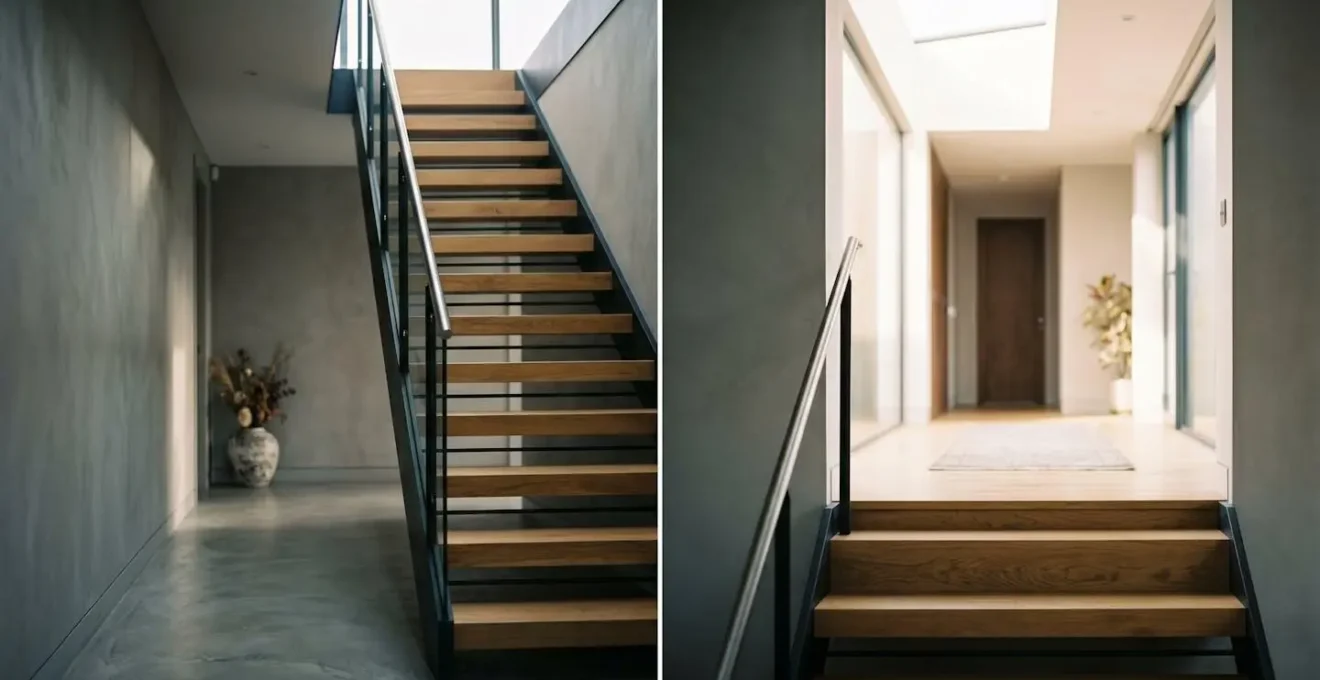
As this internal architecture demonstrates, the staircase is not wasted space; it is the central feature of the home’s narrative. It introduces light, creates dramatic sightlines, and enhances the feeling of volume. Developers understand this appeal, as the marketing team for West Tower Residences notes, duplexes allow you to “create the perfect home, beyond even your most exuberant dreams.” This is because the layout provides a superior canvas for lifestyle design, which the market prices at a significant premium over simple, horizontal floor area.
How to Assess Whether Your Penthouse Terrace Gets Actual Sunlight or Perpetual Shadow?
A penthouse terrace is often marketed as a key feature, but its real value is dictated by usability, which in Manchester, is governed by sunlight and wind. A terrace bathed in perpetual shadow or acting as a wind tunnel is a liability, not an asset. For a discerning buyer, assessing this ‘sunlight equity’ is a critical piece of due diligence. This goes beyond a simple viewing; it requires a strategic investigation into the property’s legal and environmental context, particularly concerning England’s ‘Right to Light’.
The Right to Light is a legal easement in English property law that gives a landowner the right to receive light through defined apertures in buildings on their land. As the Prescription Act of 1832 codifies, “A window that has received natural daylight for 20 years or more is entitled to forbid any construction or other obstruction on adjacent land that would block the light.” While this applies more to windows than open terraces, it establishes the legal principle that light is a quantifiable and protectable asset. Assessing your potential terrace involves investigating whether nearby planned developments could one day cast your investment into shadow.
A practical assessment is non-negotiable. This involves visiting the property at different times of the day and, crucially, under different weather conditions. A calm, sunny day may present the terrace perfectly, but a visit on a typically breezy Manchester afternoon will reveal the reality of wind-tunnel effects created by surrounding towers. Your solicitor should be tasked with a formal investigation into any light-related objections or agreements on the local council’s planning portal.
Your Action Plan: Securing Your Right to Light
- Request a ‘Sunlight & Daylight’ report from the seller, a document often required for UK planning applications under the Prescription Act 1832.
- Search the local council’s planning portal (e.g., Manchester City Council) for objections and concessions related to ‘Right to Light’ for neighbouring buildings.
- Verify if the property has enjoyed uninterrupted light for over 20 years through its main windows, which can establish a legal right to that light.
- Assess terrace usability in the typical Manchester climate; visit on a windy day to test wind-tunnel effects, comparing glass balustrades versus solid walls.
- Question the developer about any wind-mitigation studies conducted for year-round terrace usability in Northern England’s weather conditions.
New Development Penthouse or Converted Victorian Factory: Which Holds Value Better?
The Manchester skyline is a tale of two cities: gleaming new-build towers and iconic Victorian mill conversions. For a penthouse buyer, the choice between these two property types is a choice between two different investment philosophies. While the ‘character’ of a heritage conversion is alluring, a new-build penthouse often represents a higher degree of ‘asset-class purity’, which can lead to better long-term value retention and lower operational risk.
The key differentiator is future-proofing, particularly regarding energy efficiency. New builds are constructed to the latest standards, typically achieving an Energy Performance Certificate (EPC) rating of A or B. Victorian conversions, with their solid brick walls and original single-glazed windows, often struggle to achieve more than a D or E. This is a critical financial consideration, as UK Government’s Minimum Energy Efficiency Standards (MEES) already require a minimum EPC rating of E for rental properties, with a stated ambition to raise this to C by 2030. The cost of retrofitting a listed Victorian building to meet these standards can be exorbitant and architecturally restrictive, creating a significant future liability that new builds simply do not have.
This comparison extends to service charges and maintenance. A new build’s costs are generally predictable, with modern infrastructure and a well-provisioned sinking fund. A heritage conversion, however, can bring unforeseen costs related to specialist craftsmanship for 150-year-old brickwork or compliance with Historic England’s strict regulations. The following table breaks down the core differences for a strategic evaluation.
| Factor | New-Build Penthouse | Victorian Mill Conversion |
|---|---|---|
| Typical EPC Rating | A or B | D or E |
| Service Charge Inclusions | Concierge, gym, modern facilities | Heritage building maintenance, 150-year-old brickwork |
| MEES Compliance Risk | Low – already meets 2030 standards | High – may require expensive upgrades |
| Listed Building Restrictions | None | Historic England strict regulations on alterations |
| Prestige Factor | Modern luxury amenities | Industrial heritage character |
| Maintenance Costs (Annual) | Predictable, sinking fund well-provisioned | Specialist craftsmanship required, higher variability |
The £40,000 Roof Repair Bill That Only the Penthouse Owner Had to Pay
The single greatest financial risk for a penthouse owner is not understanding the precise legal definition of what they own. In English property law, this is defined by the ‘demise’ section of the leasehold agreement. A common, and costly, assumption is that the building’s structure, particularly the roof, is a communal responsibility covered by the service charge. This is often not the case. Meticulous ‘demise diligence’ is therefore non-negotiable before acquiring a top-floor property.
The demise clause explicitly outlines the physical space you are buying. As property management experts from Sebright explain, the demise typically includes the internal surfaces of your walls, the floor coverings, and the plaster on the ceiling, but critically, it might also include the entire roof structure above you or the terrace membrane beneath your feet. If the lease demises the roof to the penthouse, the owner of that penthouse is solely liable for all repairs and maintenance, from a single slipped tile to a complete structural replacement.

The financial implications of an ambiguously worded lease can be devastating. While not a penthouse case, a landmark Upper Tribunal ruling on structural liability between flats serves as a stark warning. The tribunal had to decide who was responsible for a concrete slab between two flats because the leases were silent on the matter. This highlights how easily disputes arise. For a penthouse, the stakes are exponentially higher. A full roof replacement on a large city-centre block can run into tens or even hundreds of thousands of pounds. Your solicitor must provide a crystal-clear report on exactly where your ownership, and thus your liability, begins and ends.
Analogy from the Courts: The Ambiguous Concrete Slab
In a pivotal Upper Tribunal case, a dispute arose over who should pay for repairs to a concrete slab forming the floor of one flat and the ceiling of another. The tribunal determined that because the leases were not explicit, the structure was demised with the lower flat, making that leaseholder liable. This case serves as a critical reminder for penthouse buyers: if the lease is not explicit in excluding the roof structure from your demise, the law may assume you own it, along with all associated costs.
When to Buy a Penthouse: At Launch When Pricing Is Optimistic or When the Developer Needs to Sell?
Timing the purchase of a new-build penthouse is a strategic game. The price you pay can be influenced by 8-12% simply by choosing the right moment in the development’s sales cycle. Developers typically launch projects with ‘optimistic’ pricing, especially for the flagship penthouse units, capitalizing on early excitement and marketing hype. Paying this ‘launch premium’ is rarely a good investment strategy for a discerning buyer.
The most advantageous time to engage is often towards the end of the sales cycle. As a developer nears completion and looks to close the sales office and move on to the next project, their motivation shifts. The final few units, including potentially the unsold penthouse, become a financial drag. At this point, a well-informed, chain-free buyer is in a powerful negotiating position. The developer’s need for a clean exit often outweighs their desire to hold out for the original asking price.
A second strategic window opens 2-3 years post-completion on the second-hand market. The original buyers who paid the launch premium may need to sell, and they are typically more motivated than an institutional developer. This allows a new buyer to acquire the property without any of the initial marketing inflation, benefiting from a more mature and realistic market price.
Case Study: The Ancoats Launch Premium
An analysis of new developments in Manchester’s highly desirable Ancoats area provides a clear example. Penthouses initially marketed at launch for figures around £4,700 per square metre saw their prices erode for the final remaining units as developers sought to close out the site. Buyers who purchased in the final phase secured identical properties for 8-12% below the initial launch prices, a significant saving. This demonstrates that patience and strategic timing can yield substantial financial rewards and avoid the “winner’s curse” of overpaying at launch.
How to Make a 70sqm Flat Appear More Spacious Through Strategic Furniture Placement on Plans?
While the focus of this guide is the expansive duplex penthouse, the core principle of ‘volumetric luxury’—creating the perception of space—is a valuable tool even in more compact city apartments, such as a 70-square-metre pied-à-terre. For a high-net-worth individual, a smaller secondary property’s value is in its efficiency and feel, not just its size. Strategic interior design, planned before a single piece of furniture is purchased, is key.
The goal is to maximise sightlines and light. When viewing plans, the first step is to trace the longest possible diagonal line across the main living area. This line must be kept as clear as possible. This means avoiding placing bulky furniture, like a large sofa or media unit, in a way that interrupts this view. Instead, opt for low-profile furniture and pieces with legs (like a Scandinavian-style sideboard) that create a sense of space underneath them. While developers of large apartments boast of “floor to ceiling windows that fill the space with natural light,” in a smaller flat, you must create this feeling yourself.
Secondly, think multi-functionally, but with a luxury filter. This doesn’t mean a cheap sofa-bed. It means a beautifully crafted dining table that can also serve as a grand desk, or a custom-built banquette with integrated, hidden storage. On the floor plan, designate zones for activity: a reading corner with a single elegant armchair and a floor lamp, a dining zone defined by a pendant light. Using large rugs to define these zones also tricks the eye into perceiving separate ‘rooms’ within the open-plan space, making it feel larger and more organised.
Finally, the strategic use of mirrors is a classic but effective tool. On a floor plan, identify a large, uninterrupted wall opposite a window. Designating this for a full-height or oversized mirror will double the amount of natural light and create a profound sense of depth. It’s not about making the room bigger, but making it feel boundless, applying the psychology of the penthouse to a more modest footprint.
Terraced House or Detached: Which Property Type Has Appreciated Faster Over the Past 30 Years?
When analysing the Manchester property market, a surprising trend emerges. While intuition might suggest that larger, detached homes offer the best capital appreciation, recent data indicates that the more humble terraced house has often been the stronger performer. This is a crucial insight for any investor considering a broader portfolio in the city, beyond just prime apartments. The Manchester market has seen a robust 98% increase in average home values over the 10 years to 2023, but this growth has not been uniform across property types.
According to provisional ONS data for Manchester, in the year to January 2026, terraced properties rose 5.7% year-on-year, while flats and maisonettes increased by a more modest 2.6%. This outperformance by terraced houses can be attributed to several factors. They represent a sweet spot for a huge segment of the market: first-time buyers who have been priced out of semi-detached homes, and young families looking for more space than an apartment can offer, complete with private outdoor space. Their prevalence in desirable, gentrifying neighbourhoods close to the city centre, like Chorlton and Didsbury, also bolsters their value.
While detached properties command the highest absolute prices, their market is smaller and can be more susceptible to fluctuations at the top end. The consistent, high-volume demand for well-located terraced houses provides a solid foundation for steady and impressive capital growth. The data suggests that for pure percentage-based appreciation, terraced properties have recently been a more powerful engine of growth than any other property type in Manchester.
| Property Type | Average Price (June 2024) | Annual Growth Rate |
|---|---|---|
| Detached Properties | £430,000 | Data varies by location |
| Semi-Detached Homes | £302,000 | Moderate growth |
| Terraced Houses | £230,000 | 5.7% (2026 data) |
| Flats/Apartments | £207,000 | 4.5% (highest category growth 2024) |
Key Takeaways
- Shift your investment mindset from two-dimensional area (m²) to three-dimensional ‘volumetric luxury’ (m³).
- Treat the leasehold ‘demise’ clause as the single most important financial risk factor; scrutinise roof and terrace liability.
- Time your purchase strategically to avoid the ‘launch premium’ by engaging when the developer’s motivation to sell is highest.
Why Will Your £400,000 House Be Worth £600,000 in 10 Years While Your Neighbour’s Stays at £450,000?
The phenomenon of differential property appreciation—where two similar properties experience vastly different growth in value—is the hallmark of a mature and complex market like Manchester’s. While the city as a whole has seen staggering growth, with some analyses of UK Land Registry data showing a 30.99% increase over 5 years, the future winners will be determined by hyper-local factors, not just general market uplift.
The key to outsized appreciation is not the property itself, but its immediate context and connectivity. Proximity to new, high-value infrastructure is the most powerful catalyst. As one investment analysis notes, “The announcement of a new direct tram link to the airport, a new private school campus nearby, or a specific corporate H.Q. relocation can have a disproportionately positive impact on penthouse values in that immediate vicinity.” Your £400,000 property might be in the direct catchment area for a new ‘outstanding’ rated school, while your neighbour’s, just a few streets away, is not. This single factor can add tens of thousands to your home’s value.
Furthermore, the quality of the ‘micro-neighbourhood’ plays an increasingly important role. Factors such as the presence of independent cafes, a well-maintained local park, active community groups, and even the speed of the available broadband all contribute to desirability. These are the subtle but powerful forces that attract a wealthier demographic and push values up faster than the city average. The owner of the outperforming property likely bought into an area with a clear, long-term regeneration plan, such as the Ancoats Green Project, effectively investing in the future of the neighbourhood, not just the bricks and mortar of their home.
Ultimately, the difference between a £50,000 and a £200,000 gain over a decade comes down to foresight. The successful investor looks beyond the property’s current state and assesses its position relative to future growth corridors, infrastructure projects, and social amenities. They buy the house that is about to be in the ‘right’ place.
Evaluating a duplex penthouse requires a multi-faceted approach that balances architectural appreciation with hard-nosed financial and legal scrutiny. By moving beyond simple price-per-square-metre metrics and adopting a framework that includes volumetric luxury, demise diligence, and strategic market timing, you can accurately determine if the premium is justified. To apply these principles to your own property search and ensure you are making a sound investment, the next logical step is to seek a professional, bespoke analysis of your target properties.