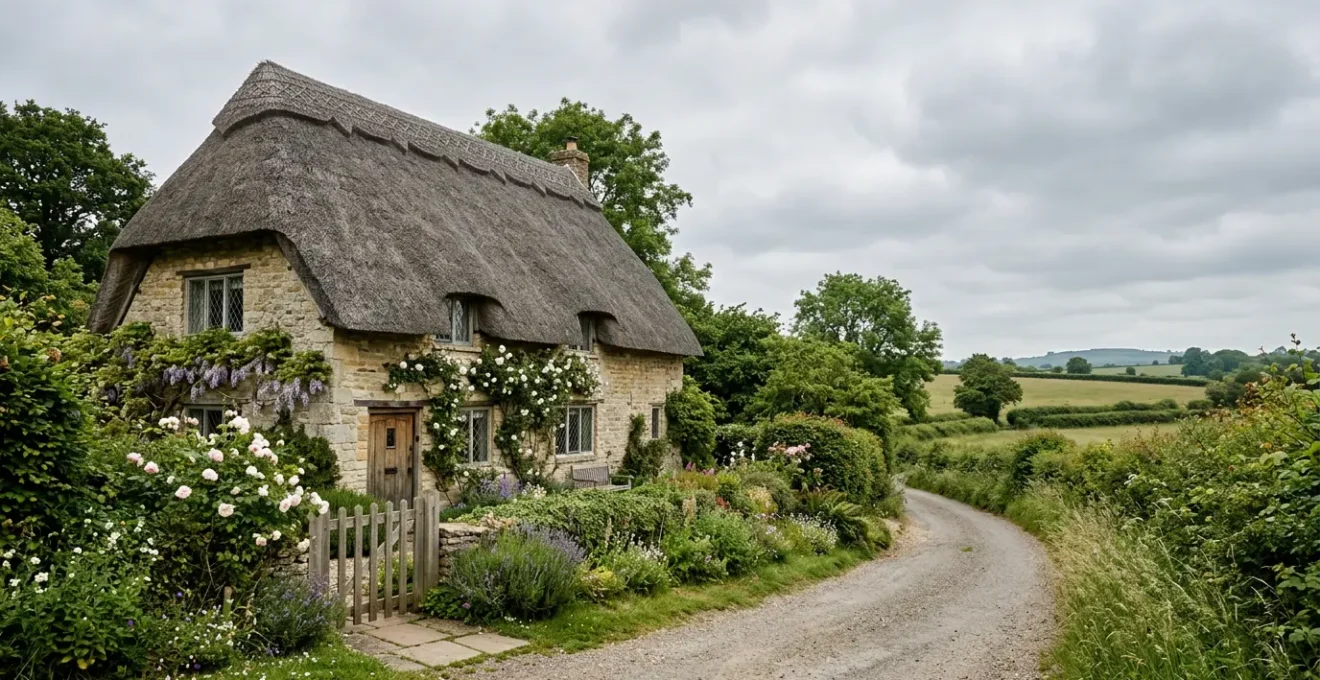
The real financial risk of owning a thatched roof in England isn’t its 25-year lifespan, but a hidden insurance clause that can leave you catastrophically underinsured after a fire.
- Underinsurance is the primary driver of massive financial loss, with standard “average clauses” capable of reducing a major claim payout by 40% or more.
- The quality and material knowledge of your Master Thatcher has a greater impact on your roof’s longevity and long-term cost than the base material alone.
Recommendation: Before focusing on lifespan, prioritise getting a professional Reinstatement Cost Assessment (RCA) and use a specialist broker to find an insurance policy that negates the ‘average clause’ trap.
The question strikes at the heart of owning one of England’s most iconic properties. You look at your neighbour’s modern tiled roof, a fixture for half a century, and then at your own architectural crown—a beautifully crafted thatched roof—and wonder why its lifespan seems so comparatively short. It’s a valid frustration for any thatched property owner facing the daunting prospect of a full re-thatch, a cost that can easily run into tens of thousands of pounds. The common answers often feel insufficient: “it’s a natural material,” or “it just needs more maintenance.” While true, these platitudes completely miss the point.
The conversation around thatch longevity is often a distraction from the far greater financial risks lurking within the ecosystem of heritage property ownership. The true cost isn’t measured in the 25-year replacement cycle. It’s measured in the devastating financial shortfall from a fire claim reduced by an obscure insurance clause, the years of life lost to a poorly executed re-thatch by an unqualified artisan, and the premium hikes driven by factors you can, in fact, control. The durability of your roof is less about a simple comparison to tile and more about a complex interplay between material science, artisan quality, and, most critically, financial diligence.
This article shifts the focus from the simplistic “thatch vs. tile” debate to the core issues that truly determine your total cost of ownership. We will dissect the fundamental differences in thatching materials that dictate their lifespan. We will provide a concrete framework for identifying a true Master Thatcher in a market of variable quality. Most importantly, we will demystify the insurance landscape, exposing the clauses that pose the greatest threat to your financial security and revealing why your premium might be £3,000 while your neighbour’s is a mere £400. This is not just a guide to thatch; it’s a guide to mastering the financial reality of your heritage home.
This guide will explore the key facets of thatch ownership, from the materials themselves to the crucial insurance details that protect your investment. The following sections break down everything a discerning owner in England needs to know.
Summary: Decoding the Realities of Thatched Property Ownership
- Why Does Water Reed Thatch Last Twice as Long as Wheat Straw?
- How to Identify a Competent Master Thatcher When Quality Varies Dramatically?
- Specialist Thatch Insurer or Standard Provider with Loading: Which Offers Better Cover?
- The £200,000 Thatch Fire Claim Reduced to £120,000 Due to Reinstatement Cost Underinsurance
- When to Schedule Thatch Repairs: Before Winter Rains or When Your Preferred Thatcher Has Availability?
- Why Do Stone Walls and Lime Mortar Require Different Maintenance Than Modern Materials?
- The Victorian Terrace Claim Rejected Because the Insurer Didn’t Cover Lime Mortar Repairs
- Why Does Your Thatched Cottage Insurance Cost £3,000 When Your Neighbour Pays £400?
Why Does Water Reed Thatch Last Twice as Long as Wheat Straw?
The dramatic difference in lifespan between thatching materials isn’t a matter of opinion; it’s a matter of botanical science and harvesting technique. A roof made from high-quality water reed can last over 40 years, whereas one made from longstraw may need replacing in as little as 15. The primary reason for this disparity lies in the physical structure of the plant stems themselves. Water reed, particularly Norfolk Reed, has hard, dense stems rich in silica. This natural glass-like compound makes the reed highly resistant to water penetration and decay, acting as a durable, organic armour against the English weather.
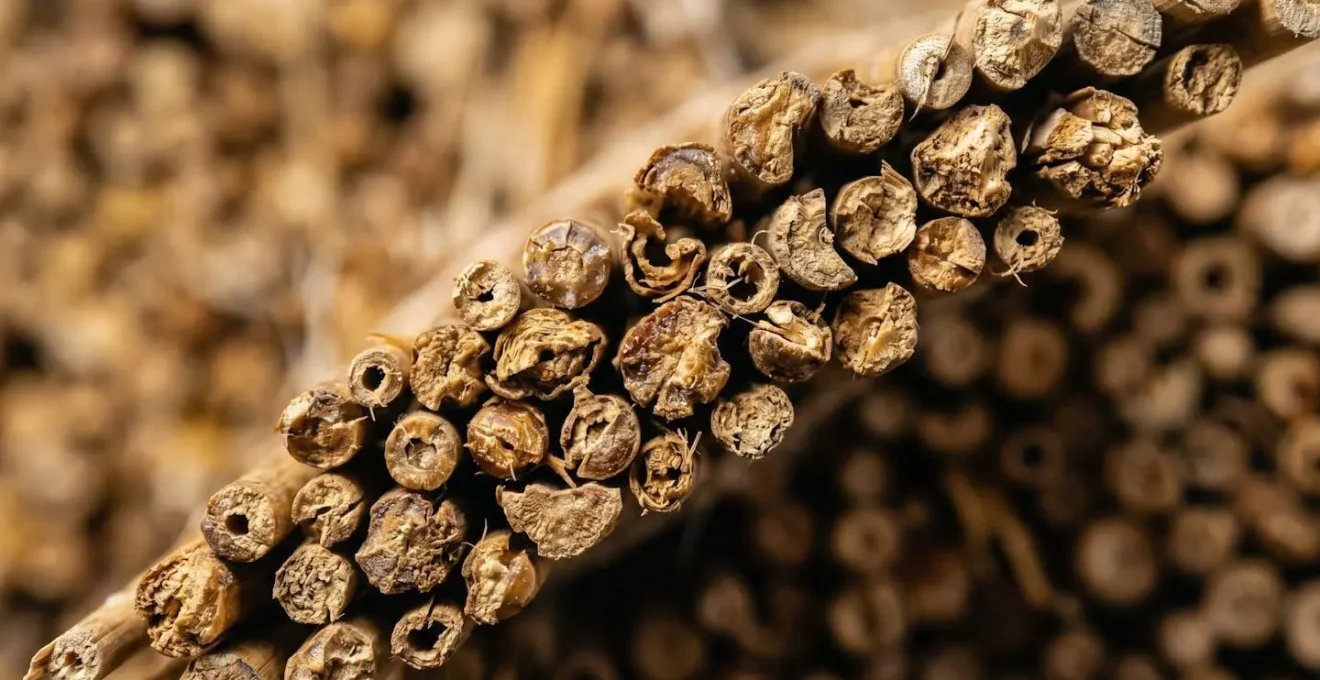
As the close-up image reveals, the texture is dense and non-porous. In contrast, wheat straw (both combed wheat reed and longstraw) is hollow and significantly softer. It absorbs more moisture and is more susceptible to rot and pest damage over time. This inherent vulnerability is why straw-thatched roofs require a steeper pitch to shed water quickly and have a shorter overall lifespan. Understanding material provenance is therefore the first step in lifecycle costing for your property. A cheaper quote using longstraw may seem attractive, but it could mean paying for a full re-thatch twice in the time a single water reed roof would have lasted.
This table from the Thatch Advice Centre provides a clear breakdown of the expected lifespans and key characteristics of the most common thatching materials used in England. The data highlights how regional availability and inherent durability directly influence both cost and longevity.
| Material Type | Lifespan (Years) | Primary Source Region (England) | Key Durability Factor |
|---|---|---|---|
| Water Reed (Norfolk Reed) | 25-40+ | Norfolk Broads | Hard, silica-rich stems resist decay and pests |
| Combed Wheat Reed | 25-35 | Devon, traditional wheat-growing areas | Moderate durability, softer than water reed |
| Longstraw | 15-30 | Various agricultural regions | Lowest durability, most labour-intensive |
How to Identify a Competent Master Thatcher When Quality Varies Dramatically?
Finding a true Master Thatcher is arguably the single most important decision you will make for the health and longevity of your roof. The title “thatcher” is not protected in the UK, meaning anyone can claim to be one. This leads to a dramatic variance in quality, where a poor job can fail in under a decade and even damage your roof’s timber structure. The challenge is compounded by the fact that, according to the Thatch Advice Centre, only one-fifth to one-quarter of the UK’s estimated 800 Master Thatchers are members of peer-assessed professional organisations like the National Society of Master Thatchers (NSMT).
Therefore, your due diligence must go far beyond a simple quote comparison. A competent artisan will welcome detailed questions about their craft, materials, and regional expertise. They should be able to discuss the provenance of their water reed or the specific characteristics of a traditional Dorset ridge with confidence. Their answers—or lack thereof—are a powerful indicator of their experience. An evasive response to questions about material origin or a quote that lacks detail on waste disposal and scaffolding should be considered major red flags. True masters are custodians of a heritage craft and take pride in their knowledge.
Your Thatcher Vetting Checklist: 5 Essential Questions to Ask Before Hiring
- Verify Professional Membership: Ask for proof of membership in the NSMT or a regional Master Thatchers Association. This confirms they are subject to peer-assessed standards and a code of conduct.
- Test Local Expertise: Pose specific questions about regional styles (e.g., “What are the characteristics of a traditional Hampshire ridge?”). This separates a true local specialist from a generalist.
- Request Material Provenance: A competent thatcher must be able to discuss the origin and quality of their materials (e.g., “Is this Norfolk reed or imported Continental water reed?”). This knowledge directly impacts roof lifespan.
- Examine Quote Completeness: Ensure the quote explicitly includes scaffolding, VAT, compliant waste disposal, ridge detail specification, and any fire-retardant measures required by your insurer.
- Understand Workmanship Guarantees: Clarify what their association membership guarantees, for how long, and what recourse is available in case of disputes. This protects your investment.
Specialist Thatch Insurer or Standard Provider with Loading: Which Offers Better Cover?
Choosing an insurer is not about finding the cheapest premium; it’s about securing the correct cover to prevent a financial catastrophe. While many standard home insurers will offer to cover a thatched property by applying a “loading” (a significant premium increase), this approach is fraught with danger. The fundamental problem is that their policies, and more importantly their loss adjusters, are designed for standard modern homes. They often contain a “condition of average” clause, a mechanism that can drastically reduce your payout if you are found to be underinsured. A specialist thatch insurer, by contrast, understands the unique reinstatement costs of heritage properties and often provides policies without this punitive clause.
Phil Cooper, a Propositions Manager at the specialist insurer NFU Mutual, highlights the proactive stance required by owners, as noted in Ideal Home:
Properly cared for, thatched roofs can last for more than half a century but thatched homeowners should take special care to maintain their property to protect their building, contents and loved ones. That means fitting fire safety equipment like fire extinguishers, fire blankets and smoke alarms, and regularly having the thatch, chimney and electrics checked by skilled tradespeople.
– Phil Cooper, NFU Mutual
Specialist providers are geared towards this level of care. They provide access to surveyors who understand heritage materials and can help you set an accurate rebuild value, known as a Reinstatement Cost Assessment (RCA). A standard provider’s online calculator will almost certainly fail to account for the cost of specialist craftsmen, lime mortar, and listed building consent, leaving you dangerously exposed.
Case Study: How a Standard Policy’s ‘Average Clause’ Creates a £10,000 Shortfall
A real scenario from UK specialist broker One Broker illustrates the risk perfectly. A homeowner insured their thatched property for £200,000 and later made a £50,000 fire claim. The insurer’s loss adjuster assessed the true rebuild value at £250,000, meaning the property was only 80% insured. The policy’s “condition of average” clause was triggered, so the insurer paid only 80% of the £50,000 claim—a £40,000 payout. This left the homeowner with a £10,000 shortfall for repairs, a direct consequence of using a non-specialist policy ill-equipped for heritage valuations.
The £200,000 Thatch Fire Claim Reduced to £120,000 Due to Reinstatement Cost Underinsurance
The single greatest financial threat to a thatched homeowner is not the fire itself, but the discovery that their insurance payout will not cover the cost of rebuilding. This scenario, where a large claim is slashed by tens of thousands of pounds, is almost always the result of underinsurance activating the ‘average clause’. The scale of the risk is immense; fire claims on thatched properties can reach hundreds of thousands of pounds, a stark contrast to the £30,000-£40,000 typical for standard homes. This is largely because, according to insurance industry data, 80% of thatched homes being listed buildings requires expensive, like-for-like repairs using traditional materials and craftsmen, a cost that standard insurance calculators completely fail to capture.
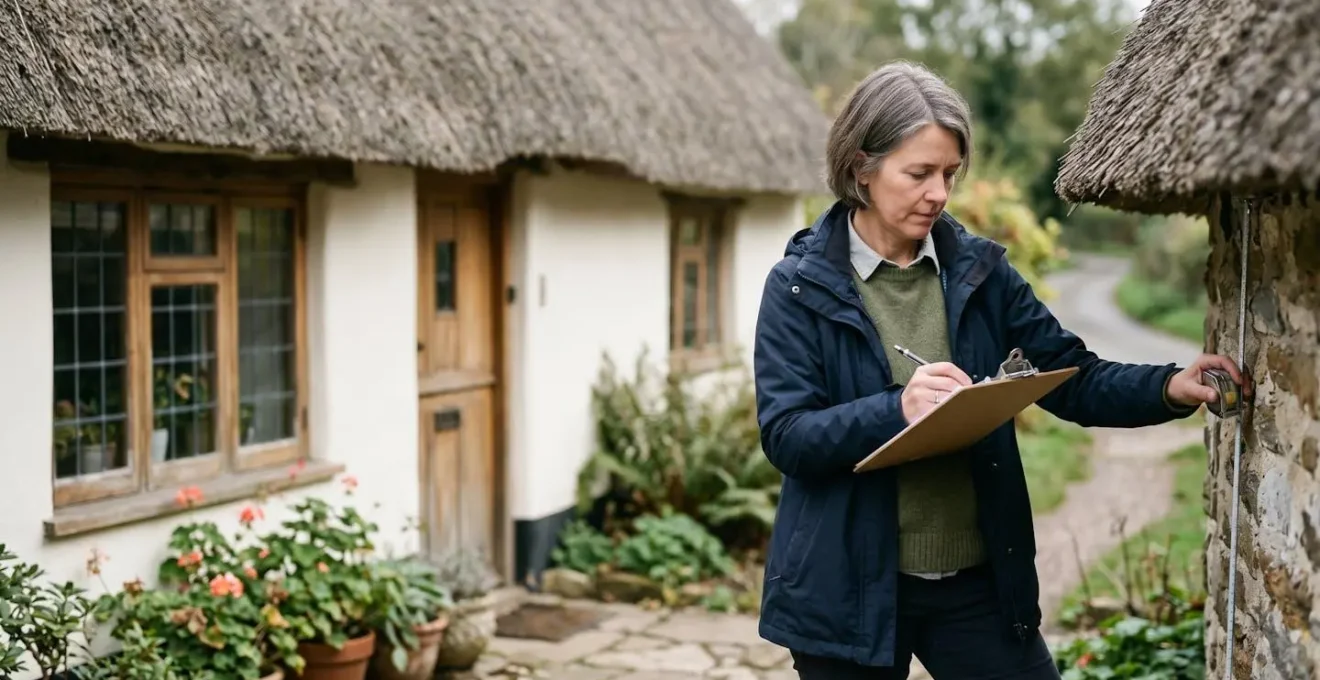
The process of determining the correct rebuild value is a specialist task, often conducted by a RICS chartered surveyor, as shown above. Getting this figure wrong is what exposes you. Imagine your £300,000 Grade II listed cottage is insured for only £200,000. You are 33% underinsured. After a fire causes £180,000 of damage, the average clause kicks in. Your insurer will only pay 67% of the claim, leaving you with a £120,000 payout and a catastrophic £60,000 shortfall. Worse, you cannot simply opt for cheaper, modern repairs, as your listed status legally obligates you to reinstate the property to its original character.
To fully grasp the mechanics of this devastating financial trap, here is a step-by-step breakdown of how the average clause operates in a real-world claim scenario:
- Step 1: True Rebuild Cost Assessed: After a fire, a loss adjuster determines the true cost to rebuild your home to its listed specification (e.g., £300,000).
- Step 2: Policy Sum Insured Checked: The insurer compares this true cost to the sum you declared on your policy (e.g., £200,000).
- Step 3: Underinsurance Percentage Calculated: The level of cover is calculated (£200,000 ÷ £300,000 = 66.7%). You are only 66.7% adequately insured.
- Step 4: Actual Repair Cost Assessed: The cost to repair the actual fire damage is determined (e.g., £180,000).
- Step 5: Average Clause Applied: Your payout is reduced by the percentage of underinsurance. You receive 66.7% of the £180,000 repair cost, which is £120,000.
- Step 6: Homeowner Faces Shortfall: You are left to find the remaining £60,000, and you are legally unable to use cheaper, non-heritage materials to cut costs.
When to Schedule Thatch Repairs: Before Winter Rains or When Your Preferred Thatcher Has Availability?
The ideal time to schedule thatch work seems logical: during the dry summer months, well before the onset of winter rains can penetrate a compromised roof. However, the reality of the market makes this a strategic challenge. The best English master thatchers are in high demand, and according to established thatching firms, they are often booked 18-24 months in advance for full re-thatching projects. This means the primary constraint on your schedule is not the weather, but the availability of a trusted artisan. Waiting until you spot a leak to find a thatcher is a recipe for disaster; you will likely be forced to accept whoever is available, regardless of their quality, or erect expensive emergency scaffolding and tarpaulins while you wait.
The key is proactive, long-term planning. This involves a two-pronged approach: regular inspections and strategic scheduling of routine maintenance. The most critical piece of planned maintenance is the ridge. A thatched roof’s ridge is its most vulnerable point and requires replacement far more frequently than the main coat.
Strategic Maintenance: The 8-10 Year Ridge Replacement Cycle
Industry standard practice in England dictates that a thatched roof requires a new ridge every 8-10 years, regardless of the main coat’s condition. This is a relatively inexpensive task compared to a full re-thatch. Crucially, during the ridge replacement, the thatcher will also “dress” the main roof, removing damaging moss and lichen and tidying the eaves. This regular ‘health check’ significantly extends the life of the main thatch. By scheduling this essential work during the off-season (e.g., early spring), you have a much higher chance of securing your preferred thatcher and can plan your finances well in advance, turning maintenance from a reactive panic into a controlled, strategic investment.
This proactive approach transforms your relationship with your thatcher from an emergency service to a long-term partnership in preserving your home. It ensures quality work is done on a predictable timeline, protecting both your roof and your finances.
Why Do Stone Walls and Lime Mortar Require Different Maintenance Than Modern Materials?
The maintenance of a thatched property extends beyond the roof itself. The entire building often functions as a single, breathable system, especially in older, listed properties. Traditional English cottages are typically built with solid stone or cob walls held together with lime mortar. Unlike modern cement mortar, which is hard, rigid, and impermeable, lime mortar is relatively soft, flexible, and critically, ‘breathable’. This means it allows moisture that enters the wall to evaporate back out, preventing damp from becoming trapped within the building’s fabric. Using modern, non-breathable materials like cement for repointing or gypsum plaster internally can be catastrophic. It effectively seals the wall, trapping moisture which can lead to damp, frost damage (spalling), and decay of internal timber frames.
This requirement for specialist materials is not a matter of aesthetic preference but of structural necessity, a fact underscored by the highest authorities on building conservation. As Historic England states in its guidance:
Thatch is clearly a major component of the architectural interest of a building; indeed, it is often the defining feature of any building on which it is used. The materials traditionally used for thatching and the way that thatched roofs are constructed and detailed vary in different parts of England, reflecting regional differences in climate, topography, geology, and historical development.
– Historic England, Conservation of Traditional Thatch guidance
This principle of using historically appropriate materials extends to the entire building envelope. With around 80% of thatched homes being listed, owners are legally bound to maintain this character. This means that repairs must be conducted on a like-for-like basis, using materials like lime mortar, under the guidance of a local conservation officer. An insurer who doesn’t understand this distinction is a significant liability.
The Victorian Terrace Claim Rejected Because the Insurer Didn’t Cover Lime Mortar Repairs
While this headline refers to a Victorian terrace, the underlying principle is a direct and severe threat to thatched property owners. The rejection of a claim because an insurer’s policy does not explicitly cover traditional materials like lime mortar is a stark warning. Many standard insurance policies contain a “modern equivalent” clause. This allows the insurer to pay only for the cost of repairing damage with a modern, cheaper alternative—for instance, using cement mortar instead of lime mortar. For the owner of a listed thatched property, this clause is a financial time bomb. Your local conservation officer will reject the use of modern materials, leaving you to fund the significant cost difference between the “modern equivalent” and the legally required heritage material yourself.
This is where the fine print of your policy becomes paramount. A specialist thatch policy is designed to avoid this trap. It should explicitly state that it covers repairs on a “like-for-like” basis, using traditional materials and craftsmen, to satisfy the requirements of a listed building. To ensure your policy provides this protection, you must stress-test it by asking your broker or insurer direct and specific questions. Vague assurances are not enough; you need confirmed details in writing.
Use the following questions to audit your current or potential insurance policy. An inability to provide clear, affirmative answers is a major indicator that the policy is inadequate for a listed thatched property:
- Question 1: ‘Does my policy explicitly cover like-for-like repairs using traditional materials like water reed and lime mortar?’ You must avoid policies with vague ‘modern equivalent’ clauses.
- Question 2: ‘What happens if my conservation officer requires heritage materials that cost more than modern alternatives?’ The policy must cover this cost difference.
- Question 3: ‘Does the policy cover specialist work like a patterned ridge to comply with listed building character?’ Clarify if you will be left to fund aesthetic compliance costs.
- Question 4: ‘Is the sum insured adequate for specialist craftsmen and heritage materials?’ Listed properties often require 20-40% higher rebuild estimates than standard valuations suggest.
- Question 5: ‘Will the loss adjuster have experience with listed buildings?’ A specialist insurer should provide a specialist loss adjuster to avoid disputes over what is necessary.
Key Takeaways
- Underinsurance is the single greatest financial risk, and the “average clause” in standard policies is the mechanism that triggers catastrophic shortfalls on claims.
- The quality, regional expertise, and material knowledge of your Master Thatcher have a more significant impact on your roof’s lifespan than any other factor.
- Specialist thatch insurance is not a luxury but a necessity. It provides accurate valuations, covers like-for-like heritage repairs, and often removes the punitive average clause.
Why Does Your Thatched Cottage Insurance Cost £3,000 When Your Neighbour Pays £400?
The vast difference in insurance premiums between a thatched home and a standard modern property can be shocking, but it is not arbitrary. It is the result of a granular risk assessment where each element of your property and lifestyle contributes to the final figure. The £2,600 price gap is a clear reflection of the heightened risk profile insurers associate with thatch, driven primarily by the perceived fire risk and the high cost of reinstatement for listed buildings. However, many homeowners are unaware that they have significant control over many of these contributing factors. Simple actions like installing a certified flue liner or having the electrical systems professionally checked can lead to substantial discounts.
Conversely, lifestyle choices, such as the use of a wood-burning stove, can add hundreds of pounds to a premium. According to specialist insurance analysis, a thatched roof can increase overall home insurance premiums by as much as double compared to a tiled roof, but the specific details of your property determine whether you are at the high or low end of that spectrum. Understanding this breakdown is the key to actively managing and potentially reducing your annual insurance costs.
The following table deconstructs the common risk factors that contribute to a high premium for a thatched property in England, offering estimated impacts and, crucially, mitigation strategies you can implement.
| Risk Factor | Estimated Premium Impact (£) | Mitigation Strategy |
|---|---|---|
| Thatch vs Tile Roof (Fire Risk) | +£1,500 | Install linked smoke alarms, fire extinguishers, consider fire-retardant spray |
| Grade II Listed Building Status | +£500 | Commission accurate RICS Reinstatement Cost Assessment to avoid underinsurance penalties |
| Distance to Fire Hydrant (Rural) | +£200 | Limited mitigation – postcode lottery of fire brigade response times |
| Modern Insulated Flue Liner | -£200 (discount) | Install HETAS-certified flue liner and provide annual sweep certificate |
| Electrical Installation Age | +£150 | Obtain updated EICR (Electrical Installation Condition Report) from qualified electrician |
| Wood Burner Usage | +£300 to +£600 | Consider decommissioning or switching to electric stove for substantial premium reduction |
To protect your heritage home and your financial wellbeing, the next logical step is to secure a specialist insurance review and commission a formal Reinstatement Cost Assessment. This proactive approach is the only way to ensure you are adequately covered and not paying more than you need to.