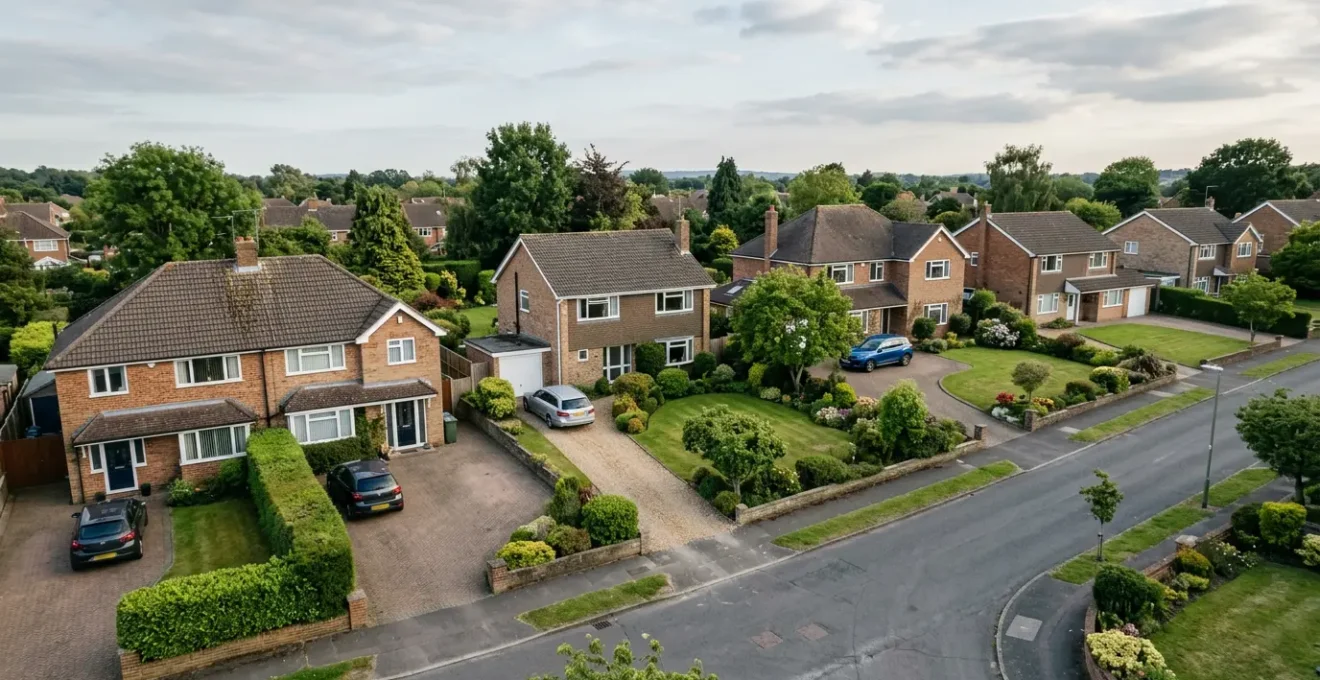
The key to a faster property sale isn’t fresh paint; it’s the elimination of “financial drag”—the hidden costs associated with leasehold-style obligations.
- Properties with pure freehold characteristics sell faster because they are tangible assets, not just homes with ongoing liabilities.
- Features like private gardens and dedicated parking aren’t just amenities; they are quantifiable financial assets that create a significant “salability premium”.
Recommendation: When buying or selling, stop thinking in terms of amenities and start evaluating features based on their power to either create or eliminate long-term financial obligations.
When a property lingers on the market, the common advice is to declutter, repaint, or even bake bread before viewings. But what if the real factors determining a swift sale are far more fundamental and financially driven? Many sellers and buyers in England focus on cosmetic appeal while overlooking the powerful, underlying forces that dictate desirability. They fail to see that a property’s market velocity is intrinsically linked to its level of “ownership purity”—the degree to which it is free from the financial entanglements of service charges, ground rents, and shared spaces.
The truth is that the modern property market operates on a principle of risk and liability reduction. Buyers are increasingly sophisticated, looking beyond the surface to the long-term financial health of their potential purchase. The core argument of this analysis is that the most desirable properties aren’t just attractive; they are financially streamlined assets. The real key to unlocking a 30% faster sale lies not in superficial upgrades, but in understanding and highlighting the absence of financial drag.
This article moves beyond generic advice to provide a data-driven breakdown of property desirability. We will dissect the quantifiable value of core freehold features, revealing why a private garden is an asset while a communal courtyard can be a liability, and how the promise of a dedicated driveway can be more compelling than any interior feature. By understanding these principles, you can better navigate the market as a buyer or seller.
Here, we will explore the specific financial and psychological drivers that make certain properties irresistible while others struggle to attract offers. This is an analytical guide to understanding true property value in the English market.
Contents: The Freehold Premium: An Analytical Guide
- Why Do Buyers Pay £20,000 More to Avoid Ground Rent and Service Charge Obligations?
- How Much Does a Private Garden Add to Value Compared to a Shared Courtyard?
- Dedicated Driveway or Permit Parking: Which Affects Your Property Value More Significantly?
- The Flat Conversion That Created Service Charges on a Previously Freehold House
- When to Add Off-Street Parking: While Living There or Just Before Marketing?
- Why Are Developers Building Fewer Detached Houses Than 30 Years Ago?
- Why Do 80% of Buyers Reject Properties Without Viewing the Floorplan First?
- Why Do Detached Houses in Commuter Towns Sell Within a Week While Flats Sit for Months?
Why Do Buyers Pay £20,000 More to Avoid Ground Rent and Service Charge Obligations?
The premium buyers will pay to avoid ongoing charges is not based on emotion; it is a calculated financial decision. These obligations represent a form of “financial drag” that directly impacts affordability and perceived value. A buyer doesn’t just see a monthly service charge; they see a reduction in their disposable income and a liability that, unlike a mortgage, never builds equity. In England and Wales, the average service charge reached £2,300 per year in 2024, a significant and often unpredictable expense.
This financial drag is worsening. With service charges rising at an alarming rate—often far outpacing inflation—buyers are rightly cautious. For example, research from Hamptons shows an 11% annual increase in 2024, compared to much lower CPI inflation. This volatility makes budgeting difficult and introduces a major element of risk that is entirely absent from a true freehold property. Buyers are paying a premium for certainty and control over their future outgoings.
The problem has now escalated to the point where it affects a property’s fundamental ability to be sold. This is the ultimate “buyer rejection threshold,” where the financial structure of the property makes it unmortgageable for a significant portion of the market.
Case Study: The Unmortgageable Service Charge
In a clear signal of market sensitivity, some mortgage lenders are now refusing to finance flats where service charges exceed 1% of the property’s value. For instance, a £4,000 annual charge on a £300,000 flat hits this threshold. A 2025 analysis revealed that 37% of flats in England and Wales had charges exceeding this 1% mark, making them significantly harder to sell. When a buyer pays more for a property without these charges, they are buying access to a wider pool of future buyers and securing their investment’s liquidity.
Therefore, the £20,000 premium isn’t an arbitrary figure. It reflects a rational calculation of the net present value of avoiding years of high, unpredictable, and non-recoverable costs, as well as the risk of being unable to sell the property in the future.
How Much Does a Private Garden Add to Value Compared to a Shared Courtyard?
The distinction between a private garden and a shared courtyard is the perfect illustration of an asset versus an amenity. A shared courtyard is an amenity—a feature you can use, but do not control and for which you likely pay a service charge. A private garden, however, is a tangible asset that you own, control, and which adds direct, quantifiable value to your property. This control and ownership purity is a primary driver of the value gap between the two.
This value is not trivial. While the exact amount varies by location and garden size, recent UK property data indicates a 5% to 20% increase in value for properties with a garden. For the average property in England, this translates to a significant financial uplift, far outweighing the perceived benefit of a shared space that comes with rules, costs, and other residents. A private garden offers utility, privacy, and the potential for extension (STPP), all of which are powerful value drivers.
The quality and orientation of the garden further refine its value as an asset. Not all gardens are created equal. A small, north-facing yard does not command the same premium as a larger, well-maintained space that receives ample sunlight. Indeed, the financial impact of a garden’s aspect is measurable, with Rightmove research demonstrating a 7% premium on asking prices for properties with coveted south-facing gardens. This demonstrates a sophisticated market that prices in not just the existence of an asset, but its quality.
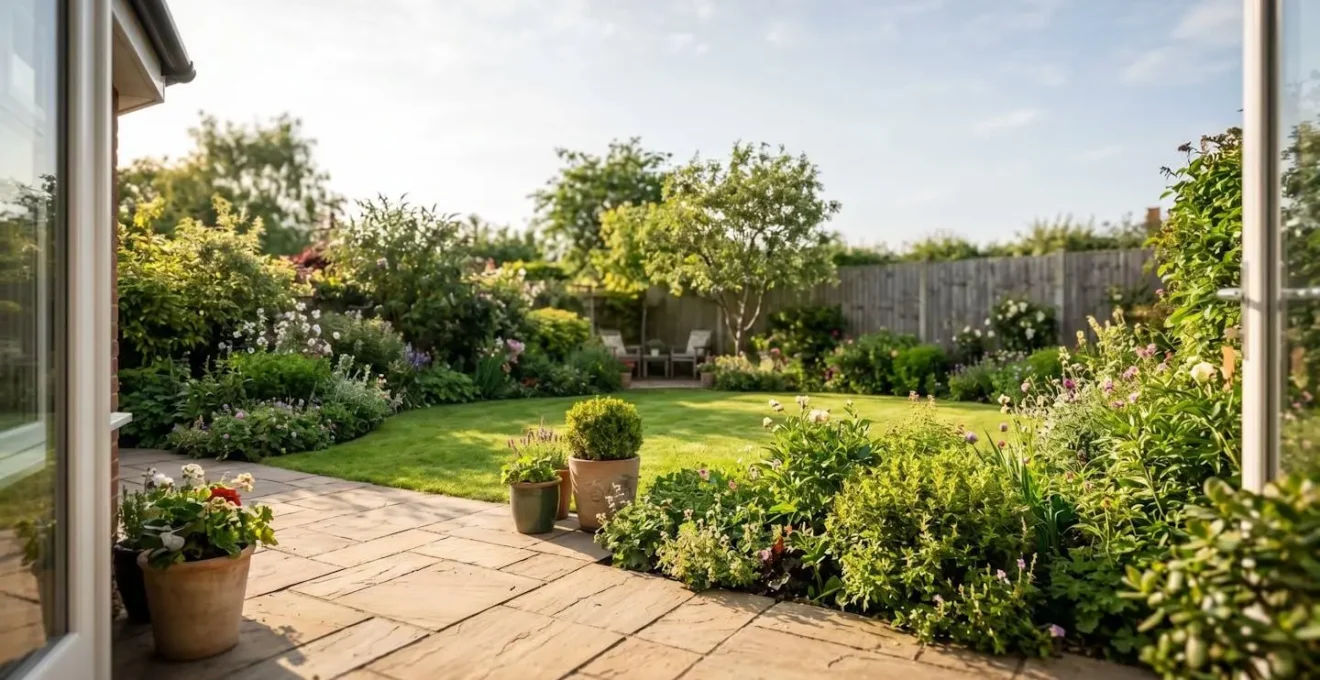
The image of a well-maintained, private outdoor space resonates deeply with buyers, representing a lifestyle of relaxation, entertainment, and family life that a shared courtyard cannot replicate. It is a powerful symbol of achieving the “English dream” of a home and garden, and buyers are consistently willing to pay a substantial premium for this slice of ownership.
Dedicated Driveway or Permit Parking: Which Affects Your Property Value More Significantly?
A dedicated driveway is a significantly more valuable asset than on-street permit parking. The reason is simple: a driveway offers certainty, security, and convenience—three factors that command a high premium in the property market. Permit parking, while better than nothing, is an unpredictable amenity. It doesn’t guarantee a space, can involve council bureaucracy, and offers no security for the vehicle. A private driveway, by contrast, is a piece of land you own, offering a guaranteed, safe space for your vehicle right outside your door.
This difference is clearly reflected in property values. While the presence of any parking is a plus, off-street parking is the gold standard. An analysis by Yopa reveals that a parking space adds an average of £12,000 to a property’s value across England, a figure that can skyrocket in congested urban areas like London. This value is a direct monetisation of the convenience and peace of mind it provides. For many buyers, particularly families or those with mobility issues, the absence of a dedicated driveway is a “rejection threshold” that removes a property from consideration immediately.
For homeowners with a front garden and the potential to create a driveway, the question becomes one of return on investment. The process involves more than just laying paving; it requires council permission for a “dropped kerb” and adherence to specific construction standards. The costs associated with this conversion can be significant, but they must be weighed against the substantial value added. The following table breaks down the typical costs involved in creating this valuable asset.
| Item | Average Cost Range | Notes |
|---|---|---|
| Dropped Kerb Application Fee | £70 – £100 | Council processing fee |
| Complete Dropped Kerb Installation | £800 – £1,200 | Including council inspections and labour |
| Driveway Material (Gravel/Block Paving) | £30 – £50 per m² | Cheapest options |
| Driveway Material (Tarmac) | £40 – £60 per m² | Mid-range durability |
| Driveway Material (Concrete) | £50 – £100 per m² | Most expensive, highest durability |
Investing a few thousand pounds to create an asset that adds £12,000 or more to the property’s value represents a clear financial win. It transforms an underutilised front garden into a feature that broadens the property’s appeal and directly increases its market price, making it one of the most effective pre-sale improvements available.
The Flat Conversion That Created Service Charges on a Previously Freehold House
The dream of “freehold” is one of complete ownership and freedom from landlords and their associated fees. However, a modern phenomenon known as “fleecehold” is blurring these lines, creating situations where freehold homeowners find themselves liable for estate charges that function identically to leasehold service charges. This often occurs when a large freehold house is converted into multiple flats, or on new-build estates where communal areas need maintenance.
While the vast majority (around 98% of flat sales in England and Wales in 2024) are leasehold by nature, the creeping introduction of service charges to freehold properties is a concerning trend for buyers seeking “ownership purity.” This is especially prevalent on new private developments where councils refuse to adopt the roads and public spaces, forcing developers to set up management companies funded by residents. This can come as a nasty shock to buyers who specifically sought out a freehold property to avoid such charges.
The critical difference is that while a leaseholder expects these charges, a freehold buyer often does not. This unexpected financial drag can lead to significant buyer resentment and can negatively impact the property’s desirability and future saleability when compared to a “pure” freehold with no such obligations.
Case Study: The Freehold House with Service Charges
A well-documented scenario involves homeowners on modern estates who own their freehold house and land, yet are still required to pay significant annual fees to a management company. One UK homeowner on a mixed development pays approximately £600 per year for the upkeep of communal roads, lighting, and gardens. Despite owning their home outright, they are locked into a contract with a management firm, effectively creating a service charge on a freehold property. This illustrates how the “freehold” label alone is no longer a guarantee of freedom from ongoing, variable charges, and why discerning buyers now scrutinize property deeds for any such encumbrances.
This erosion of the freehold ideal is a key reason why properties that are truly free of any and all service or estate charges command a premium. Buyers are paying for the security of knowing their ownership is absolute and that they will not be subject to the whims and escalating fees of a third-party management company.
When to Add Off-Street Parking: While Living There or Just Before Marketing?
Adding off-street parking is one of the most reliable ways to increase a property’s value and salability. However, the decision on *when* to undertake this project is critical. Given the significant lead times involved in gaining council permissions and completing the work, this is not a quick, pre-sale fix. The process, from initial research to final inspection, can easily take several months, making it a project best undertaken well in advance of marketing the property, ideally while you are still living there to enjoy the benefits yourself.
The primary bottleneck is not the construction itself, but the administrative process with the local council for obtaining permission for a dropped kerb. This is a non-negotiable legal requirement. Attempting to create a driveway without official permission can lead to enforcement action and the costly reinstatement of the pavement at the homeowner’s expense. The timeline involved highlights why a last-minute decision is unfeasible and a proactive approach is essential.

The quality of the installation is also paramount. A professionally installed driveway not only looks better but also ensures compliance with drainage regulations (to prevent flooding) and will stand the test of time. A poorly executed job can deter buyers and may even need to be redone. Therefore, planning ahead allows you to secure a reputable contractor and ensure the job is done to a high standard, maximising the return on your investment.
Action Plan: Timeline for Dropped Kerb and Driveway Installation
- Pre-application research (1-2 weeks): Check if your property is in a Conservation Area or under Article 4 Direction restrictions, which may prohibit or complicate driveway installation.
- Council application submission (Week 3): Submit a dropped kerb application to your local English council with the required fee (typically £70-£100) and documentation.
- Council assessment period (4-8 weeks): The council reviews the application, may conduct a site visit, and issues an approval or refusal, often with specific conditions.
- Contractor procurement (2-4 weeks): Obtain quotes from council-approved contractors, verifying they meet all specifications for the installation.
- Installation work (1-3 weeks): Physical construction of the dropped kerb and driveway surface, including essential base preparation and drainage compliance.
- Council inspection (1 week): A final inspection by the council to ensure all work meets the approved specifications before the project is officially signed off.
Given this minimum timeline of 12-18 weeks, it’s clear that adding a driveway is a strategic home improvement, not a quick flip. Acting early ensures you can navigate the process without the pressure of an impending sale.
Why Are Developers Building Fewer Detached Houses Than 30 Years Ago?
The scarcity of new-build detached houses in England is a direct consequence of fundamental economic pressures: the high cost of land and the government’s focus on meeting housing targets through high-density development. Thirty years ago, land was cheaper and more plentiful, allowing developers the space to build larger, detached homes. Today, developers must maximise the return on every expensive parcel of land, which inevitably leads to building more properties—such as terraced houses, semi-detached homes, and blocks of flats—on a given plot.
This shift in development strategy has a profound impact on the property market. It means that the existing stock of older, detached houses with generous plots and pure freehold titles is becoming an increasingly rare and sought-after commodity. They represent a type of property that is simply not being replaced on a like-for-like basis. The market for new homes is dominated by properties designed for density, which often come with the compromises of smaller gardens, overlooked spaces, and sometimes, the “fleecehold” estate charges discussed earlier.
Furthermore, while the overwhelming preference is for freehold houses, some developers have historically used the leasehold model even for houses to generate additional long-term income streams from ground rents. Although legislative changes are tackling this, it has contributed to the complexity of the market. As HM Land Registry statistics show, only 6% of houses were sold as leasehold in 2024, indicating it’s a small but not insignificant part of the market that buyers are keen to avoid. This reinforces the premium placed on traditional, uncomplicated freehold houses.
The result is a two-tier market. On one side, you have the new-build market, which is efficient at delivering housing units but often at the cost of space, privacy, and ownership purity. On the other, you have the existing stock of detached homes, which offer the very features the modern development model is squeezing out. This inherent scarcity is a powerful engine of value, ensuring that well-located detached houses will continue to command a significant premium and sell quickly when they come to market.
Why Do 80% of Buyers Reject Properties Without Viewing the Floorplan First?
The statement that 80% of buyers reject properties without seeing a floorplan first speaks to a powerful psychological driver in the property search: the need to mentally inhabit a space before physically visiting it. A floorplan is not merely a technical drawing of dimensions and layout; it is the primary tool for reducing uncertainty and enabling projection. Without it, a potential buyer cannot begin the crucial process of visualising their own life, furniture, and routines within the property. This inability to project creates cognitive friction and risk, leading to immediate rejection.
In the digital age, buyers are triaging dozens of properties online before deciding which ones to view. They are looking for reasons to say “no” to shortlist the most viable options. The absence of a floorplan is one of the easiest and most definitive reasons. It signals a lack of transparency from the seller and forces the buyer to guess about fundamental aspects of the property:
- Flow and Layout: Is the kitchen connected to the dining area? Is the bathroom conveniently located?
- Room Proportions: Will my existing sofa fit in the living room? Is the second bedroom large enough for a home office?
- Storage: Are there built-in wardrobes or sufficient space for them?
- Potential: Can a wall be removed to create an open-plan space?
Photographs can be misleading, artfully framed to make rooms appear larger or hide awkward layouts. A floorplan, however, is a source of objective truth. It allows a buyer to build a mental model of the home, to “walk through” it in their mind’s eye. This mental rehearsal is a critical step in the journey toward making an offer. When a listing lacks a floorplan, it breaks this process before it can even begin. The property remains an abstract collection of images rather than a potential home.
Therefore, providing a floorplan is one of the most critical elements of modern property marketing. It’s not an optional extra; it’s a fundamental piece of information that respects the buyer’s time and enables the very first step of emotional connection. Its absence creates a “buyer rejection threshold” that is simple, brutal, and entirely avoidable. It is the digital equivalent of locking the front door and expecting people to imagine what’s inside.
Key Takeaways
- Financial Drag is Real: Service charges and ground rents are not just expenses; they are a quantifiable drag on a property’s value and salability.
- Assets over Amenities: Prioritise features you own and control (private gardens, driveways) over shared amenities that come with costs and rules.
- Certainty Sells: A pure freehold title, a dedicated parking space, and a clear floorplan all work to reduce buyer uncertainty, which is a powerful driver of faster sales.
Why Do Detached Houses in Commuter Towns Sell Within a Week While Flats Sit for Months?
The stark difference in market velocity between detached houses and flats in commuter towns is the ultimate proof of the concepts discussed. It is the culmination of financial drag, the asset-versus-amenity calculation, and buyer psychology playing out in the real world. A detached house often represents the pinnacle of “ownership purity,” while a flat, by its very nature, is more likely to be burdened by the financial drag of leasehold obligations.
Detached houses in desirable commuter locations sell quickly because they offer a bundle of the most sought-after assets: space, privacy, a private garden, and typically, off-street parking, all wrapped in a clear freehold title. They are the physical embodiment of what buyers are looking for when they seek to escape the compromises of city living. They are a finite and desirable resource, and when one comes to market, the competition is immediate and fierce.
Flats, on the other hand, frequently languish for the opposite reasons. Even a beautifully presented flat can be anchored down by high service charges. As demonstrated, these charges don’t just affect monthly costs; they directly impact salability. In fact, a 2025 analysis revealed that flats with service charges below 1% of their value were 50% more likely to find a buyer quickly than those with charges of 2% or more. This is a massive, quantifiable penalty on sale speed.
Even more concerning for flat owners is the impact on capital value. The same financial drag that slows down sales can also erode profit. In a market where buyers are hyper-aware of ongoing costs, flats with high charges are simply less attractive investments. This is borne out by hard data: recent data shows that nearly one in five (19.9%) flat sellers in England & Wales in 2025 sold their property for less than they originally paid. This demonstrates that financial drag is not just a theoretical concept; it is a powerful force that actively destroys wealth.
The market, in its wisdom, is sending a clear signal. The premium and speed associated with selling a detached house are not accidental; they are the logical reward for offering a clean, unencumbered, and desirable asset. The delays and price-chips associated with selling a flat are the market’s way of pricing in the risk, uncertainty, and financial drag of leasehold obligations.
To succeed in the English property market, whether buying or selling, it is imperative to adopt this analytical mindset. Evaluate every property not just on its curb appeal, but on the financial integrity of the asset itself. By focusing on acquiring properties with strong freehold characteristics and minimal financial drag, you are not just buying a home; you are making a sounder, more liquid, and ultimately more profitable investment.