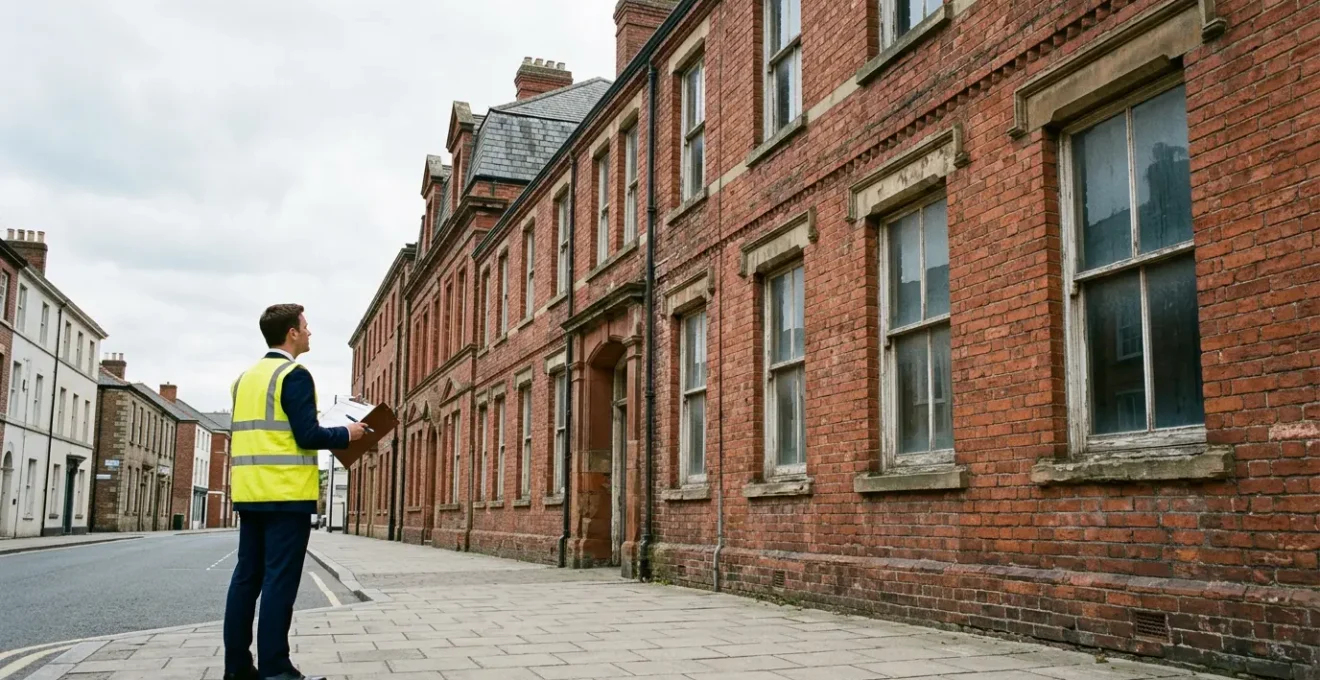
The “standard” repair clause in your commercial lease is likely the biggest vulnerability in your property investment, not its protection.
- The legal term “to keep in repair” does not oblige a tenant to replace or improve old components, leaving landlords to foot the bill for systemic failures.
- A tenant’s liability is capped by the actual loss in your property’s value (diminution), meaning a £50,000 repair bill might only be worth a fraction of that in court.
Recommendation: Shift your focus from relying on generic FRI terms to implementing precision-drafted clauses and a robust Schedule of Condition to create a legally binding and enforceable baseline from day one.
The tenant has returned the keys, the lease has ended, and you are standing in a property that bears little resemblance to the one you handed over. The carpets are worn, the lighting is faulty, and there are signs of water ingress near a flat roof that looks well past its prime. You assumed the Full Repairing and Insuring (FRI) lease was your ironclad guarantee. Yet, when the initial surveyor’s report lands on your desk, it details a potential £50,000 shortfall between the property’s current state and its required condition. You are not just a landlord; you are a commercial landlord surprised and facing a significant financial hit.
Many property owners believe that an FRI lease is a “get out of jail free” card for all maintenance, repair, and renewal. The common wisdom is to sign the lease and collect the rent, secure in the knowledge that the tenant is responsible for everything. However, this assumption is the primary reason so many landlords find themselves in costly, protracted disputes at lease-end. The reality of dilapidations in England is a complex legal minefield governed by case law stretching back over a century and specific statutory caps that tenants can, and will, use to their advantage.
The key to avoiding this financial shock is not in having a repair clause, but in understanding its limitations and strategically reinforcing it. This is not about being a more aggressive landlord; it is about being a more precise one. If the true defence against dilapidations lies not in the lease type but in the specific, enforceable detail within it, then we must look beyond the headlines. The crucial question is not “Is it an FRI lease?” but rather, “How does my lease define ‘repair’, what is the established condition baseline, and what is the real, recoverable value of my claim?”
This guide will deconstruct the common loopholes and legal principles that tenants exploit. We will examine why vague obligations fail, how to draft clauses that hold up under scrutiny, the strategic timing of your claims, and the absolute necessity of a professionally prepared Schedule of Condition. By understanding these specialist concepts, you can shift from being a surprised victim of circumstance to a prepared and protected asset manager.
To navigate this complex but critical area of property management, we have broken down the essential knowledge you need into clear, actionable sections. This structured approach will guide you through the key legal principles and strategic decisions that determine whether you recover your costs or face a significant loss.
Summary: A Landlord’s Guide to Preventing Costly Dilapidations Disputes
- Why Does “Keep in Repair” Not Require Your Tenant to Replace a 30-Year-Old Roof?
- How to Write Repair Obligations That Close Common Loopholes Tenants Exploit?
- Claim Dilapidations During the Lease or Wait Until Expiry: Which Approach Recovers More?
- The £80,000 Dilapidations Claim Reduced to £15,000 Because of a Schedule of Condition
- When to Commission a Dilapidations Survey: 18 Months Before Expiry or at Break Notice?
- Why Does an FRI Lease Mean You Never Pay for Roof Repairs as Landlord?
- Why Can a Victorian Building Restriction Still Control What You Build Today?
- Why Does a 15-Year FRI Lease Make Your Commercial Property Worth 20% More Than a 5-Year?
Why Does “Keep in Repair” Not Require Your Tenant to Replace a 30-Year-Old Roof?
The most dangerous assumption a landlord can make is that a tenant’s covenant “to keep in repair” means they must return the property in a new or improved condition. This is a fundamental misinterpretation of English property law. The core of the issue lies in the legal distinction between “repair” and “renewal.” Repair means remedying deterioration; it does not mean providing the landlord with something wholly different from what was originally leased. If a 30-year-old roof fails due to age and inherent defects, forcing a tenant to install a brand-new roof system could be legally deemed a “renewal” or “improvement,” the cost of which may not be recoverable.
The standard of repair is not absolute. As the Landlord and Tenant Act 1985, Section 11(3) clarifies for residential properties, a principle often applied by analogy in commercial cases, is that “regard shall be had to the age, character and prospective life of the dwelling-house.” A tenant is not obliged to make the property better than it was at the start of the lease. This is often a shock to landlords who see a failed component and expect a modern replacement. The tenant’s duty is to maintain the existing fabric, not to upgrade it. This is why a landlord might face a failing roof and find the tenant is only liable for patching it, not replacing it entirely.
Furthermore, the common law concept of “inherent defect” can protect tenants. If a building component fails because it was poorly designed or constructed from the outset, a tenant may successfully argue they are not liable for fixing this fundamental flaw. The costs associated with these disputes are significant; in England, it’s estimated that industrial properties average around £7.27 per square foot in dilapidations costs. This ambiguity is precisely why clause precision, which we will explore next, is paramount. Without it, you are leaving the financial liability for major capital expenditure to the interpretation of a court.
How to Write Repair Obligations That Close Common Loopholes Tenants Exploit?
The antidote to the ambiguity of “keep in repair” is clause precision. A standard, off-the-shelf lease is an invitation for dispute. A specialist-drafted lease, however, is a tool of enforcement. To prevent the £50,000 surprise, your repair clauses must be meticulously crafted to address specific components, standards, and scenarios, effectively closing the loopholes tenants rely on. This is where you move from passive landlord to active asset manager.
First, explicitly define the scope. Instead of a general “repair” clause, your lease should itemise key structural and mechanical elements. For example, specify that the tenant is responsible for “maintaining, and when necessary for the proper functioning of the building, replacing the roof membrane to keep the premises wind and watertight.” This language moves beyond simple “repair” and introduces a functional standard. It’s also vital to counter the historic precedent set by cases like Proudfoot v Hart (1890), which established that a covenant “to keep in good repair” implicitly requires the tenant to first *put* the property into good repair, even if it was in poor condition at lease commencement. This is a major trap for tenants, but one you cannot rely on without risking a costly dispute. The modern, and safer, approach is to establish a clear baseline from the start.
This is achieved by making a professionally prepared Schedule of Condition an integral part of the lease. The repair clause should state that the tenant’s obligation is “to keep the property in no worse state of repair and condition than as evidenced by the Schedule of Condition appended to this lease.” This single sentence transforms the entire dynamic, preventing claims for pre-existing issues and creating an undisputed factual baseline. Documentation is your shield; professional case studies show that tenants with robust photographic schedules successfully reduce claims by demonstrating clear boundaries of deterioration.

Finally, include clauses for redecoration at specific intervals and upon lease expiry, defining the standard required (e.g., “with two coats of good quality paint to a professional standard”). Do not leave it to interpretation. Every pound you spend on legal precision during drafting can save you ten pounds in unrecovered dilapidations and legal fees at the end of the term. The goal is to create a document so clear that there is nothing left to argue about.
Claim Dilapidations During the Lease or Wait Until Expiry: Which Approach Recovers More?
A landlord’s right to enforce repair covenants is not limited to the end of the lease. You have the power to serve an “interim” schedule of dilapidations during the term. The strategic decision of *when* to act can significantly impact your recovery rate and the tenant relationship. Waiting until expiry is the most common approach, but it is often not the most effective. By the time the lease ends, the tenant may have disappeared, or their business may have become insolvent, leaving you with a building in disrepair and a claim against an empty shell.
Serving an interim schedule can be a powerful strategic move. It sends a clear message that you are actively managing your asset and expect compliance. It forces the tenant to address issues before they escalate, preventing minor defects from turning into major structural problems. For a landlord, this preserves the building’s condition and value throughout the term. However, the legal remedy for an interim claim is different. You can’t typically claim damages; instead, you may be able to enter the property to carry out the works and recover the cost from the tenant as a debt, but only if the lease contains a specific right to do so (a “Jervis v Harris” clause).
A terminal claim, served at or after lease end, is a claim for damages. This is where large sums are often negotiated; one UK consultancy recently reported settling over £20 million in dilapidations claims in a single year. While the potential recovery is high, it’s also subject to the tenant’s statutory defences, such as the Section 18(1) valuation cap. Furthermore, landlords should note that a claim for loss of rent during the repair period is often difficult to win, as you must prove the property would have been immediately re-let had the repairs not been necessary.
The following table, based on recent analysis, illustrates how dilapidations costs can vary significantly by sector, influencing the potential scale of your claim. It highlights that office spaces often face the highest costs per square foot, making proactive management even more critical in that sector.
| Property Sector | Average Cost per Square Foot (£) | Percentage of Total Claims |
|---|---|---|
| Office Properties | £26.94 | 38% |
| Retail Spaces | £14.20 | 37% |
| Industrial Properties | £14.29 | 25% |
The optimal strategy often involves a hybrid approach: use the threat of an interim schedule to ensure compliance during the term, while preparing meticulously for a comprehensive terminal claim. This maintains the property’s value and maximizes your financial leverage at expiry.
The £80,000 Dilapidations Claim Reduced to £15,000 Because of a Schedule of Condition
The single most powerful tool for a landlord to secure their position—and for a tenant to defend it—is the Schedule of Condition. Its impact cannot be overstated. Imagine a scenario: a landlord presents a terminal schedule of dilapidations for £80,000, citing numerous items of disrepair. The tenant, however, produces a professionally prepared Schedule of Condition that was appended to the lease. This document, with its dated, high-resolution photographs and detailed descriptions, proves that 80% of the “disrepair” already existed when they took possession. The landlord’s claim is immediately undermined, and the final settlement is negotiated down to £15,000, covering only the deterioration that occurred during the lease term. This is not a fictional scenario; it is the reality of dilapidations practice in England.
The legal power of the schedule comes from its ability to override the default common law position. As a leading case established, a general repair covenant can be interpreted as an obligation to ‘put and keep’ a property in repair. This principle was famously articulated in the case of Proudfoot v Hart (1890).
If the property is in disrepair at the start of the lease, the tenant is responsible for putting it into repair and keeping it that way.
– Proudfoot v Hart (1890), Leading case authority on ‘put and keep in repair’ obligations
Without a Schedule of Condition, a tenant taking on a 10-year lease of an old industrial unit could find themselves liable for replacing a roof that was already failing at day one. The schedule, when properly referenced in the repair clause, effectively negates this ‘put in repair’ obligation. It creates a new, lower baseline for the tenant’s liability. For a landlord, agreeing to a Schedule of Condition provides certainty. It forces a transparent assessment of the property from the outset and prevents protracted, evidence-thin arguments at the end of the term. It encourages a better quality of tenant and a more professional relationship. While it may limit your ability to claim for pre-existing disrepair, it secures your right to claim for all new disrepair, which is a much stronger and more enforceable position.
When to Commission a Dilapidations Survey: 18 Months Before Expiry or at Break Notice?
Timing is everything in dilapidations. For a landlord, commissioning a terminal dilapidations survey is not something to be left until the keys are returned. Strategic timing provides you with crucial leverage, whether you are facing a lease expiry or a tenant’s break notice. The conventional wisdom is to act around 18 months before the lease ends. This timeframe is strategic for several reasons. It gives you a clear, early picture of the potential claim, allowing for accurate financial forecasting. It also provides ample time to open a dialogue with the tenant, encouraging them to carry out the works themselves before the lease ends—often the most cost-effective solution for all parties.
Acting early also protects you against rising costs. Repair works are subject to inflation, and delaying a survey means the final bill will likely be higher. For instance, the BCIS dilapidations database shows a projected 10.09% increase in dilapidations work prices in England between mid-2023 and mid-2025. By assessing and quantifying the required works early, you can lock in estimates and pressure the tenant to act before costs escalate further.

The situation is even more critical when a tenant serves a break notice. Most break clauses are conditional upon the tenant yielding up the premises in accordance with the lease covenants. If the property is in disrepair, the break may be invalid, and the lease could continue, obliging the tenant to keep paying rent. Therefore, you must commission a dilapidations survey immediately upon receiving a break notice. This survey will determine if the break conditions have been met. It provides you with powerful leverage: you can either negotiate a financial settlement for the dilapidations in exchange for accepting the break or, if the disrepair is significant, challenge the validity of the break notice entirely.
In both scenarios—lease expiry and break notice—a proactive, early survey is not an expense; it is an investment in maximizing your negotiating position and securing the financial health of your asset. It transforms you from a reactive party to one that controls the timeline and the terms of the discussion.
Why Does an FRI Lease Mean You Never Pay for Roof Repairs as Landlord?
This statement is one of the most pervasive and dangerous myths in commercial property. A Full Repairing and Insuring (FRI) lease is the landlord’s goal, but it is not a magic shield. The principle of an FRI lease is to transfer the responsibility for all repairs, maintenance, and insurance costs to the tenant, either directly or through a service charge. As leading legal guides state, this is the standard for commercial leases in England.
Generally, commercial leases are granted on a full repairing and insuring (FRI) basis, which means that, in addition to the rent payable to the landlord, the tenant is also responsible (whether directly or by way of service charge) for the cost of repair and insurance of the premises.
– Baker McKenzie Global Corporate Real Estate Guide, England and Wales Leases Section
However, the existence of an FRI lease is the *start* of the conversation, not the end. It establishes the tenant’s liability in principle, but it does not guarantee your recovery of costs. As we’ve seen, the term “repair” is open to interpretation. A tenant with an FRI lease can still argue that replacing an entire roof constitutes an “improvement” or “renewal,” not a “repair,” and therefore falls outside their obligation. They can still argue that the disrepair was present before their lease began, and without a schedule of condition to prove otherwise, you may face a difficult battle.
Even with a perfectly drafted FRI lease, the final claim is subject to statutory caps and intense negotiation. A typical dilapidations claim for a standard 10,000 sq ft commercial warehouse in England can range from £30,000 to £80,000 or more. The landlord may serve a schedule for the upper end of this range, but the final settlement is almost always lower. An FRI lease gets you to the negotiating table with a strong hand, but it doesn’t win the game for you. The tenant will appoint their own surveyor to scrutinise every item, challenge costs, and prepare legal defences. The FRI lease is your ticket to the fight; it is not a guaranteed knockout.
Why Can a Victorian Building Restriction Still Control What You Build Today?
A landlord’s dilapidations claim can be completely derailed by factors that have nothing to do with the property’s physical condition. One of the most potent defences a tenant can deploy is the existence of a restrictive covenant, which can dramatically reduce or even nullify a claim. These covenants, often dating back to the Victorian era when much of England’s housing stock was built, can dictate how a property can be used or what can be built on the land. In England, an estimated 4.86 million dwellings are leasehold, a system where such historic covenants are common.
Their power in a dilapidations context comes from a crucial piece of legislation: Section 18(1) of the Landlord and Tenant Act 1927. This statute provides a two-pronged cap on dilapidations damages. The first limb, and the most important, states that a landlord cannot recover more in damages than the amount by which the value of their property has been diminished by the disrepair. This is known as the “diminution in the value of the reversion.” If a restrictive covenant prevents the property from being used for a more valuable purpose, or a planned redevelopment, it can cripple the property’s value. In such a case, even if the tenant has caused £100,000 of disrepair, if the property’s value has not decreased as a result (because the covenant already limited its value), the landlord may recover little to nothing.
The Section 18(1) Defence in Action
As highlighted in a legal analysis of diminution valuations, Section 18(1) is a tenant’s ultimate defence. If a landlord intends to demolish the building at lease end, any repairs the tenant carries out would be rendered worthless. This “supersession” argument forms the second limb of the S.18(1) defence, capping the landlord’s claim at nil because the repairs would be superseded by the demolition. Similarly, if a covenant restricts a site to low-value industrial use when it could otherwise be prime real estate for residential development, the diminution in value caused by disrepair might be negligible compared to the value lost due to the covenant.
Therefore, as a landlord, you must be aware of any restrictive covenants affecting your property not just when buying it, but when strategizing for a dilapidations claim. A tenant’s surveyor will investigate these thoroughly. Ignoring a forgotten Victorian restriction could render your entire dilapidations claim worthless.
Key Takeaways
- The legal term “repair” does not mean “replace” or “improve.” Your lease must explicitly define the standard required to hold tenants accountable for the full scope of work.
- A professionally prepared Schedule of Condition, appended to the lease, is the most effective tool to prevent disputes over pre-existing disrepair. It creates an undeniable factual baseline.
- A landlord’s claim is legally capped by the “diminution in value” of the property (Section 18(1) of the LTA 1927). A £50,000 repair bill is worthless if the property’s value hasn’t actually decreased.
Why Does a 15-Year FRI Lease Make Your Commercial Property Worth 20% More Than a 5-Year?
While the internal mechanics of a lease dictate your ability to recover dilapidations costs, the lease *length* itself has a profound impact on the fundamental value of your commercial property. From an investor’s or lender’s perspective, a property let on a 15-year FRI lease to a strong tenant is a significantly more valuable and secure asset than the exact same property let on a 5-year term. The 20% figure is indicative, but the principle is absolute: longer lease terms create covenant strength and income security, which are the cornerstones of commercial property valuation.
A long lease provides a guaranteed income stream for a longer period, reducing the “void risk”—the risk of the property sitting empty and generating no income. This long-term, predictable cash flow is highly attractive to investors and makes the property easier to finance. A lender will always offer more favourable terms on a property with a 15-year income stream than one where the income is only guaranteed for five years, after which the landlord faces the cost and uncertainty of finding a new tenant. This directly translates to a higher capital value.
However, this long-term value is still underpinned by the tenant’s compliance with their repair obligations. A 15-year lease is 15 years of potential wear and tear. As a landlord, it’s crucial to understand that even with this enhanced value, the end-of-term dilapidations process remains adversarial. Figures from surveyors show that final settlements are often 40% to 60% below the landlord’s opening claim figure, reflecting the negotiation and legal realities. To navigate this process effectively, you must be familiar with the formal procedure set out by the Dilapidations Protocol.
Your Action Plan: The Dilapidations Protocol Timeline
- Landlord’s Action (Post-Lease End): You must serve the Schedule of Dilapidations and a Quantified Demand on the tenant, ideally within 56 days of the lease terminating.
- Tenant’s Response: The tenant has a further 56 days from receiving your claim to respond with their own comments and counter-arguments.
- Negotiation Period: You and the tenant (or your respective surveyors) should arrange to meet for “without-prejudice” negotiations within 28 days of the tenant’s response to try and settle the dispute.
- Dispute Resolution: At every stage, both parties are expected to consider Alternative Dispute Resolution (ADR), such as mediation, to avoid costly court proceedings.
- Litigation as Last Resort: If no agreement can be reached, court proceedings can be initiated. However, the Protocol is a pre-action protocol, and failure to comply with its spirit and timeline can lead to adverse costs orders from the court, even if you win the substantive claim.
Ultimately, a long lease enhances your property’s value by providing income security, but that value is only preserved through diligent enforcement of the repair covenants using the formal, structured process that governs dilapidations in England.
To prevent a £50,000 surprise on your next lease expiry, the crucial first step is a professional review of your current lease templates and enforcement strategy. Do not wait for the keys to be returned; secure your asset’s value from the day the lease is signed.