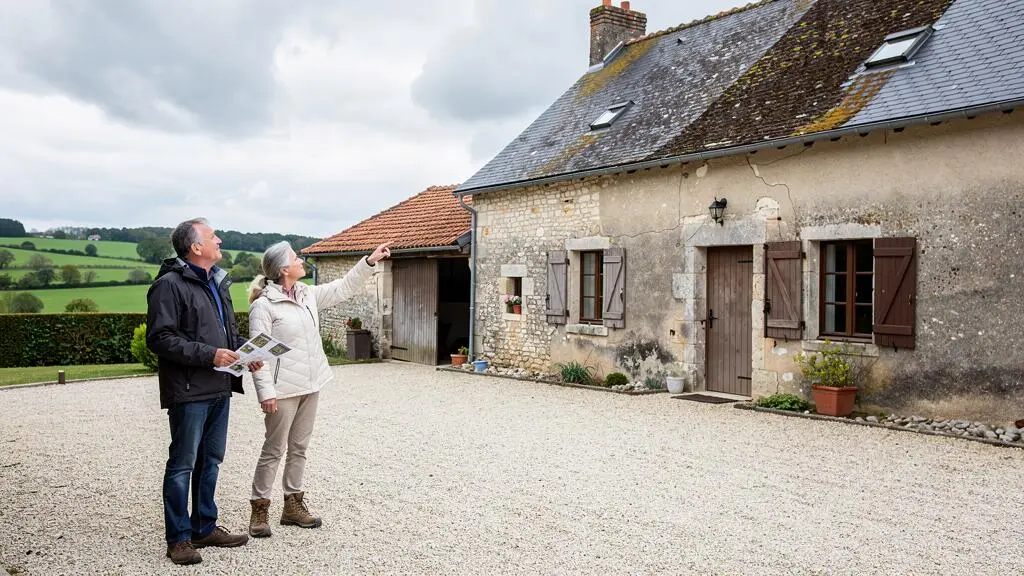
The Limousin countryside presents an opportunity that many British buyers find difficult to ignore: traditional stone houses often listed at prices far below the national French average, set within rural landscapes that promise tranquillity and authenticity. Yet the question remains whether these apparently accessible properties represent a sound and lasting investment strategy, or whether low listing prices mask costs and complexities that can undermine financial viability.
For a buyer based in England considering a French property purchase, the Limousin region requires careful analysis beyond the initial attraction of affordability. The real test of this strategy lies not in the purchase price alone, but in the total cost of acquisition, ownership and — should the need arise — eventual resale. Understanding these elements before committing transforms what might appear to be an impulse decision into an informed, strategic choice grounded in realistic expectations.
Investing in real estate in Limousin: a sound and lasting strategy?
Direct answer: Yes, investing in property in the Limousin can be a sound and lasting strategy, but only when the buyer reasons in terms of total real cost and holds realistic expectations about liquidity, rental demand and the time horizon required for a rural property investment to deliver value.
The Limousin region, now part of the larger Nouvelle-Aquitaine administrative area, occupies a distinctive position within the French property market. Prices here consistently rank among the most accessible in the country, with rural stone houses and smallholdings often available at levels that would seem implausible in most other European regions. This affordability reflects genuine structural factors: relatively low population density, limited industrial employment, and distance from major metropolitan centres.
British interest in the Limousin and neighbouring rural areas has remained consistent despite broader economic uncertainty. According to the French rural land agency SAFER, UK nationals purchased 1,669 homes in the French countryside during 2020, with an average price of approximately €176,000 per property, as reported by Complete France citing SAFER data. The Limousin forms part of this wider pattern of British buyers seeking value in rural France.
Yet affordability alone does not constitute investment soundness. A lasting strategy requires matching the property type, location and intended use to realistic expectations about costs, income potential and resale prospects. The stone farmhouses and village properties that characterise the Limousin market appeal strongly to buyers seeking a renovation project or a quiet rural retreat, but these same characteristics can limit rental income potential and complicate eventual resale if the local market remains thin.
A sound property decision starts with a clear understanding of what you actually want to achieve. Are you looking for a personal second home, a seasonal rental investment, or a long-term property with realistic expectations for future value? Each objective calls for a different approach and comes with its own set of considerations. Before making a commitment, it is worth looking beyond generic listings and promotional claims to see what is genuinely available on the local market. Exploring current properties through this link offers a practical way to discover available opportunities and compare them against your priorities.
What types of properties can you find in the Limousin and Dordogne?
The property stock available across the Limousin and the neighbouring Dordogne département reflects the agricultural and artisanal heritage of these rural regions. Prospective buyers typically encounter several recurring property types, each with its own implications for budget, renovation requirements and practical usability.
Traditional stone houses dominate the market. These properties, constructed from local limestone or granite, range from modest two-bedroom cottages to more substantial four- or five-bedroom family homes. Many retain original features such as exposed beams, stone fireplaces and thick walls that provide natural insulation. A significant proportion require renovation work of varying scale, from cosmetic updates and modern services installation through to structural repairs including roof replacement, damp treatment and complete rewiring.
Village houses offer another common option. These terraced or semi-detached properties sit within small rural communes and often provide more immediate habitability than isolated farmhouses. Proximity to basic services — a bakery, a small shop, perhaps a weekly market — can make village properties more practical for owners who cannot visit frequently or who plan to let the property to tenants unfamiliar with deep countryside living.
Farmhouses and agricultural buildings attract buyers seeking larger land parcels or those interested in conversion projects. Former farm complexes often include the main residence plus barns, stables or outbuildings that might be converted into guest accommodation, workshops or storage. Land attached to these properties can range from a modest garden plot to several hectares of pasture or woodland, with corresponding implications for maintenance obligations and costs.
Building plots and ruins represent the entry point for buyers willing to undertake substantial construction or reconstruction work. Ruins — properties retaining some walls but lacking a roof or internal structure — may benefit from lower acquisition costs but require full rebuild budgets and careful verification that planning permission for reconstruction remains valid.
Price levels vary considerably depending on condition, location and size. Habitable village houses might be found from around €80,000 to €150,000, while stone farmhouses requiring renovation can start below €100,000 but often require equivalent or greater sums to bring to a comfortable standard. Properties in move-in condition, particularly those with land or exceptional period features, command higher prices that can reach €250,000 to €400,000 or beyond, though these remain modest by comparison with urban French markets or equivalent rural properties in southern France.
These price ranges reflect observations from regional property specialists including Limousin Property Agents, whose inventory covers the Limousin, Dordogne and surrounding areas, and should be understood as indicative rather than exhaustive. Market conditions, individual property condition and negotiation all influence final transaction prices.
What are the real costs of buying as a non-resident buyer?
The gap between a property’s advertised price and the total sum required to acquire and own it represents one of the most significant planning challenges for British buyers examining the French market. Several categories of cost apply to any property purchase in France, and non-resident buyers should budget for each before committing to an offer.
Notaire fees and transfer taxes form the largest addition to the purchase price. In France, a notaire — a qualified legal professional appointed by the state — handles the conveyancing process for every property transaction. The fees charged by the notaire, together with the associated transfer taxes known as droits de mutation, typically add between 7 and 8 per cent to the purchase price for an older property, or 2 to 3 per cent for new-build homes, according to guidance published by property transaction specialists.
This means a rural stone house listed at €120,000 will likely require an additional €8,400 to €9,600 in transaction costs, bringing the total acquisition outlay to approximately €128,400 to €129,600 before any renovation or furnishing expenditure. The notaire’s role encompasses title verification, search completion, tax calculation and registration of the sale with the French land registry, providing a level of legal security that is mandatory rather than optional.

Survey and diagnostic costs also apply. French law requires sellers to provide a dossier of diagnostic reports covering asbestos, lead, termites, energy performance and other structural or environmental factors. While the seller typically arranges these, buyers may commission an independent structural survey, particularly for older rural properties where structural condition can be difficult to assess without specialist knowledge. These surveys can cost several hundred pounds but often prove worthwhile for properties requiring renovation.
Ongoing ownership taxes affect all residential property owners in France, whether resident or not. The UK Government’s guidance on buying French property confirms that two main property taxes apply: Taxe Foncière, a land tax paid by the property owner, and Taxe d’Habitation, historically a residence tax though recent reforms have abolished this for many primary residences. Non-resident owners typically remain liable for both taxes, with amounts varying by commune and property value. Annual bills might range from a few hundred to over a thousand euros depending on the property and location.
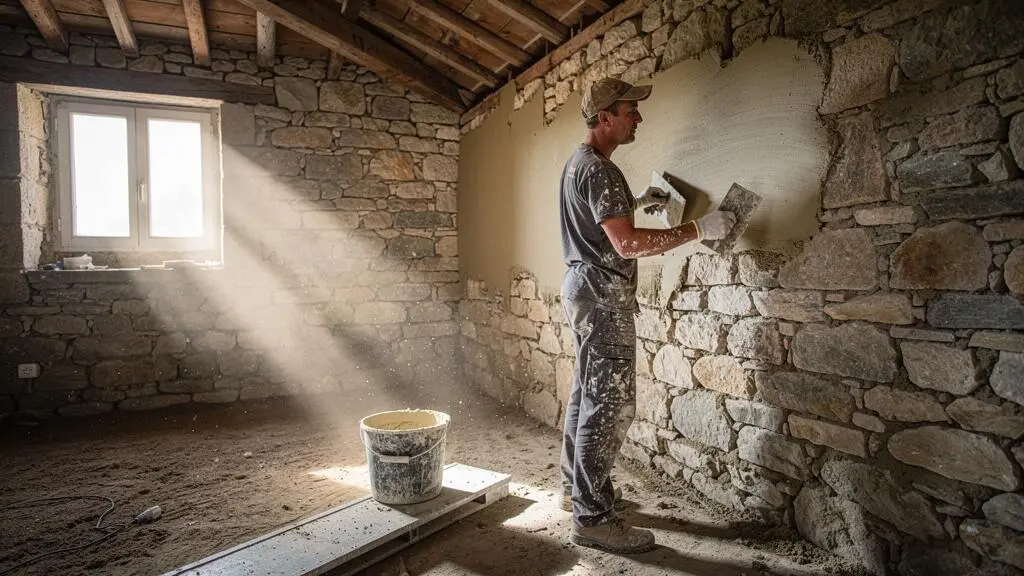
Renovation and maintenance budgets represent the largest variable cost, particularly for stone houses marketed as requiring restoration. Renovation costs for rural properties can vary widely based on the scope of work required, the accessibility of the site, and the availability of local tradespeople. Structural repairs, roof replacement, installation of modern plumbing and electrical systems, insulation upgrades, and interior finishing can quickly accumulate into five-figure sums. For a property requiring substantial renovation, it is not uncommon for the total refurbishment cost to match or exceed the original purchase price.
British buyers should also consider currency exchange costs when transferring funds from sterling to euros, insurance for the property during ownership, utility connection or reconnection fees if services have been disconnected, and any costs associated with managing or maintaining the property remotely if you cannot visit regularly.
How to build a buy-to-let strategy in rural France
Purchasing a property in the Limousin with the intention of generating rental income requires a different evaluation framework than buying a personal retreat. A viable buy-to-let strategy in rural France depends less on the low purchase price and more on realistic assessment of rental demand, occupancy rates, management arrangements and the balance between rental income and ongoing costs.
Define your rental objective clearly. Seasonal holiday lettings and long-term residential rentals represent distinct markets with different demands, regulations and income profiles. Seasonal lettings may generate higher nightly rates during summer months but often produce income only during limited peak weeks, leaving the property unoccupied for much of the year. Long-term rentals to local residents provide steadier income but require properties that meet local housing standards and are located near employment or services, which rural Limousin properties may not always offer.
Assess local rental demand rigorously. Rural areas with limited tourism infrastructure, sparse population and few local employers face inherently constrained rental markets. Before assuming a property will let reliably, examine actual rental listings and occupancy data for comparable properties in the same commune or canton. Consider proximity to attractions, accessibility by road, and the existence of competing rental properties already serving the same small market.
Budget for renovation to rental standard. A property that seems habitable for occasional personal use may fall short of the standard expected by paying guests or long-term tenants. Compliance with French safety regulations, provision of proper heating, reliable hot water, functioning kitchen and bathroom facilities, and adequate furnishing all require investment that must be recovered through rental income over time.
Plan for remote management. Managing a rental property from England introduces practical challenges including guest communication, key handover, cleaning between bookings, maintenance response, and handling any problems that arise outside your own visits. Many buyers rely on local management agencies or individual property managers, which reduces direct involvement but adds a management fee — often 15 to 25 per cent of rental income — that directly reduces net returns.
Calculate realistic net yield. Gross rental income must be reduced by management fees, property taxes, insurance, utilities, maintenance, cleaning costs, marketing fees for listing platforms, and an allowance for void periods when the property stands empty. Once these recurring costs are deducted, net rental income can fall well below gross figures, sometimes leaving only modest returns that may not justify the capital invested, particularly once renovation costs are included.
Common error to avoid: Assuming low purchase prices automatically produce profitable rental yields. In thinly populated rural markets, demand constraints and high operating costs can prevent rental income from covering ownership costs, leaving the investment dependent entirely on uncertain long-term capital appreciation.
Understand French tax obligations. Rental income earned from French property is generally subject to French income tax and social charges, even for non-resident owners. Tax treaties between the UK and France usually allow you to offset French tax paid against UK tax liability, but the administrative requirement to file French tax returns and potentially pay social charges at rates near 17.2 per cent can significantly affect net income. Professional tax advice specific to your circumstances is essential before committing.
Disclaimer: This article provides general information about property investment considerations in the Limousin region and does not constitute financial, legal or tax advice. Prospective buyers should consult qualified independent advisers in both the UK and France before making any property purchase or investment decision.
Taking the first steps with local expertise
Investing in Limousin property can indeed form part of a sound and lasting strategy, provided expectations remain grounded in the realities of rural property ownership, total cost analysis, and the specific objectives that drive your purchase decision. The region’s affordability offers a genuine entry point into French property ownership, but durability as an investment depends on careful selection, realistic budgeting, and clarity about your intended use and time horizon.
Before committing to any property, ask yourself several foundational questions: Can you afford the total acquisition cost including notaire fees and taxes, not just the listing price? Do you have a clear renovation budget if the property requires work, and have you verified the availability and cost of local tradespeople? If you plan to rent the property, have you confirmed actual rental demand in that specific location? Can you manage the property remotely, or have you identified reliable local support? And finally, can you hold the property for the medium to long term without depending on rapid resale or immediate rental income?
Answering these questions honestly helps distinguish a strategic purchase from an impulsive decision driven by attractive headline prices. The Limousin market rewards patience, thorough due diligence, and realistic expectations. It tends to penalise buyers who underestimate renovation complexity, overestimate rental income, or assume rural property will appreciate quickly.
Local expertise becomes particularly valuable when navigating these decisions from a distance. Agents familiar with the Limousin and Dordogne markets can provide insight into specific communes, realistic renovation cost expectations, and the practical challenges of different property types. They can also facilitate the process of viewing properties, liaising with notaires, and coordinating any surveys or inspections required before exchange.
Engaging with detailed local property inventories allows you to move from general interest to specific evaluation, comparing actual available properties against your budget and objectives. This practical exploration clarifies what is realistically achievable within your financial parameters and helps refine your search criteria before you invest time and money in viewings or formal offers.
The lasting success of a Limousin property investment ultimately rests not on the low prices that initially attract attention, but on the quality of analysis, preparation and decision-making that precedes the purchase. Approached with diligence and realistic expectations, rural French property can offer enduring value; approached carelessly, it risks becoming a financial and practical burden far removed from the rural idyll originally imagined.